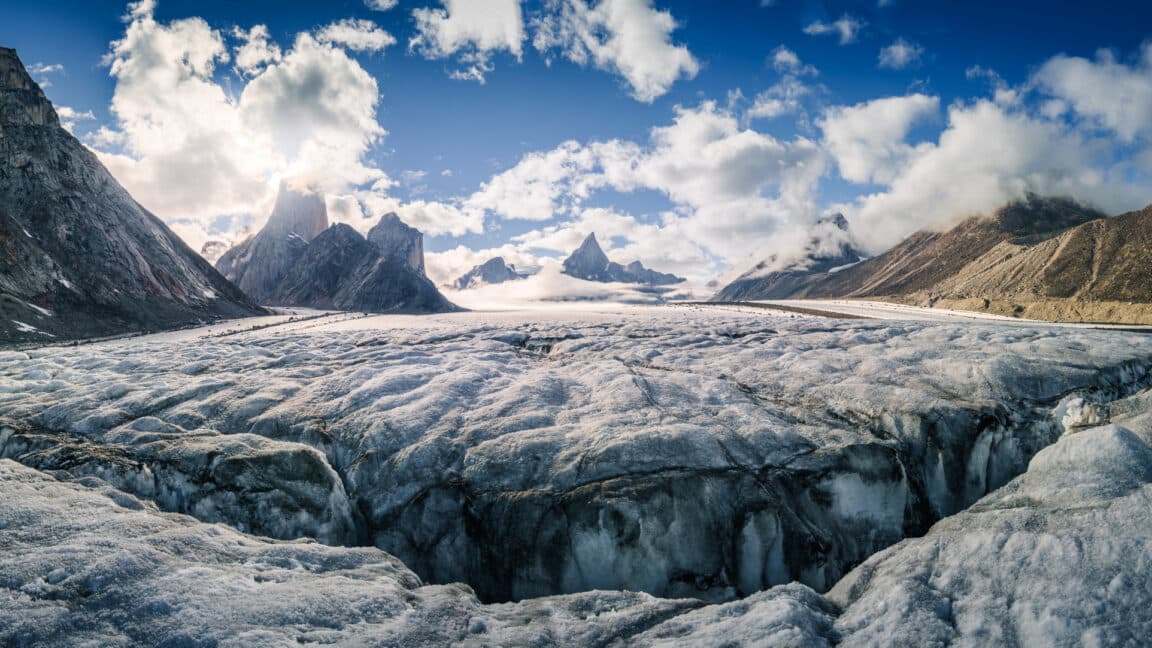
Barnes Ice Cap on Baffin Island is the last surviving fragment of the Laurentide Ice Sheet, the mass that once buried most of Canada under two miles of ice and held roughly 80 meters of sea level equivalent. A new Science study led by Nicolás Young of Columbia's Lamont-Doherty Earth Observatory shows this remnant reached its minimum size 3,600 years ago, then began re-expanding around 2,000 years ago.
That re-expansion was not a curiosity. Young's team interprets it as the opening phase of a new glaciation, a full ice age in its early stages. Human-caused warming reversed it around 1960. The window between 2,000 years ago and six decades ago is the window in which Earth was, by its own logic, heading back into an ice age.
The reason Barnes can provide direct physical evidence of its own history comes down to basal temperature conditions that preserved a readable record, and that mechanism is exactly what makes the full paper worth reading. The numbers here are not estimates. They are drawn from the ice itself.
[READ ORIGINAL →]