Design News
Product design, UX research, visual design trends, and design tool updates for the tech industry.
109 articles
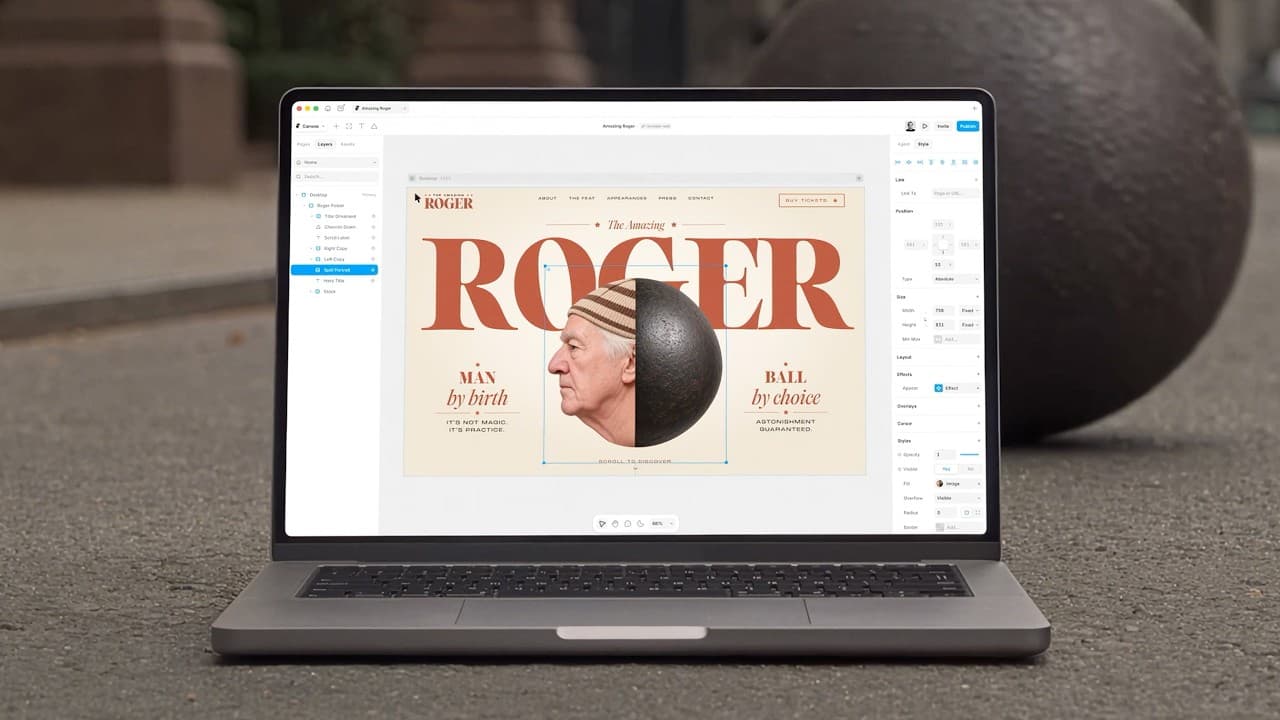
Using Figma Motion to create a viral karaoke app in 30 mins I Design Roulette Ep 4
Design Roulette episode where contestants create a karaoke app using Figma Motion and generative plugins in 30 minutes with random challenges.
Designing with web standards: The playbook for this AI moment
Explores how AI product design should follow web standards principles to avoid repeating history's mistakes and ensure consistency across implementations.
Play and design: in favour of the novel digital experience
An exploration of how design has shifted from encouraging exploration to prioritizing efficiency, and the case for reintroducing playfulness into digital experiences.
What 32 design leaders do when told to move faster
Design leaders share strategies for accelerating work without sacrificing quality, drawing insights from ancient Greek philosophy.
The terminal became my canvas
An exploration of using the terminal as a design canvas, examining both its advantages and limitations for creative work.
AX is just the orchestration layer
Explores how AI/UX work has shifted from screen-based interfaces to deeper architectural layers, examining the orchestration challenges beneath the surface.
Figma for Edu workshop: Making vector icons in Figma
Educational workshop on creating scalable vector icons in Figma, covering tools like the pen tool, boolean operations, and best practices.
Who made this, Designing excuses, DesignOps in the age of AI
Weekly design resources exploring AI's impact on creative work, authorship questions, and DesignOps practices in an AI-driven landscape.
When design becomes the organisation, and AI becomes the design
Explores how AI is reshaping organizational design and what happens when machines become designers of the entities that design everything.
Taste cannot be delegated
Explores how AI is transforming design by democratizing execution, making taste and strategic judgment the true competitive advantage over pure production.
Figma for Edu: Building with components workshop
Educational workshop on Figma components, variants, and design systems. Covers building reusable components, component properties, slots, and publishing libraries.
The interface has left the building
How conversational AI, voice, and agentic systems are fundamentally reshaping UX design principles beyond traditional screen-based interfaces.
The Kintsugi problem
An exploration of how the most critical design decisions emerge when systems fail, drawing parallels to the Japanese art of kintsugi.
Craft still matters, but it’s about outcomes
AI is automating design production, shifting craft from pixel-perfect artifacts to strategic problem-solving and outcome ownership.
The 5 Qualities of Site-Specific AI Chatbots
Nielsen Norman Group outlines five key qualities for building trustworthy site-specific AI chatbots: handoff willingness, flexibility, proactivity, emotional responsiveness, and transparency.
Design-System Maturity: A 6-Dimension Framework
A 6-dimension maturity framework for assessing design system health beyond linear progression models.
From Kickoff To First Concept: How To Turn Brand Strategy Into Visual Direction
A guide to the pre-concept phase of brand identity design, where teams establish shared direction through research and stakeholder alignment before creating visual concepts.
Getdesign.md
Browse independent design system analyses from popular websites and use them as reference for coding agents in your projects.
Ease in, ease out, and everything between
Learn how to write CSS easing curves using familiar pen tool handle techniques from design software.
Designing excuses
An exploration of how market forces shape design norms and the justifications designers create for their choices.
DesignOps in the age of AI: when governance becomes orchestration
DesignOps is evolving to orchestrate both human designers and AI tools, shifting from process governance to managing human-AI collaboration for ethical outcomes.
Designing For Distressed Users: Why Mental Health Apps Shouldn’t Follow Every UI Fashion
Mental health apps need simplified, trust-focused UI design rather than trendy interfaces that increase cognitive load for vulnerable users.
The canvas is not dead ft. Catt Small (Dropbox) | Config 2026
Catt Small from Dropbox discusses when to use AI tools versus manual design work for complex products serving millions of users.
Closing keynote ft. Dylan Field (CEO & Co-founder, Figma) | Config 2026
Dylan Field, CEO and co-founder of Figma, shares closing remarks at the Config 2026 conference.
Protoypes, failures, and unexpected breakthroughs ft. Noah Finer (Figma) | Config 2026
Noah Finer from Figma discusses balancing rapid prototyping with polished microinteractions, and how these approaches shaped products like Figma Slides and FigPals.
Human methods, new material: AI for the classroom ft. Mubarak Marafa & Wendy Liao | Config 2026
Figma Config 2026 talk on designing Goodnotes Classroom by integrating AI with human-centered methods and educator feedback.
Best practices are trapped in your head and your AI has no idea ft. Harald Kirschner | Config 2026
Harald Kirschner discusses how to capture design best practices and team knowledge so AI tools can assist with specs, prototypes, and design systems effectively.
Managing multiple creative passions in a specialized world ft. Lauren Hom | Config 2026
Lauren Hom discusses balancing multiple creative pursuits throughout her 15-year career in a world that prioritizes specialization.
10 years of daily sketching ft. Zach Lieberman (MIT Media Lab) | Config 2026
Zach Lieberman shares insights from 10 years of daily creative coding practice, exploring iteration, boredom, and finding creative freedom.
Reimagining NASA.gov for Earth’s most important stories ft. Ben Shown & Megan Greco | Config 2026
NASA redesigned NASA.gov with a new design system called Horizon, focusing on telling stories about missions and discoveries with cohesion and clarity.
ESPN's migration playbook: moving to Figma w/ One North ft. Matt Roger & Elliott Muñoz | Config 2026
ESPN and One North share how migrating from Photoshop to Figma improved collaboration, scaled workflows, and accelerated design system development for broadcast graphics.
What the Lean Startup still teaches us about generative AI
How Lean Startup principles apply to generative AI development, addressing why 95% of enterprise AI pilots fail due to poor execution methodology.
Should you really aim to be the best?
Explores how comparison and counterfactual thinking affect satisfaction, using Olympic medal research to examine whether aiming to be the best is actually beneficial.
The promotion that didn’t take
An analysis of how job titles often misalign with actual skill levels and maturity in design careers, revealing structural flaws in traditional career progression models.
Ready for the world ft. Vicki Tan | Config 2026
Vicki Tan shares her journey of creating an illustrated book about decision-making using Figma, blending product design with authorship and creative exploration.
Own the loop: how designers and researchers win with AI evals ft. Setor Zilevu (Figma) | Config 2026
How designers and researchers can lead AI evaluation efforts by centering human needs and creating measurable definitions of AI quality.
The most important component: community ft. Alicia Kranjc (Figma) | Config 2026
Alicia Kranjc explores how community and human connection remain central to creative work as AI transforms design processes.
Don't forget the feeling: a critique of software in 2026 ft. Luis Ouriach (Figma) | Config 2026
Luis Ouriach from Figma discusses balancing AI tools with human creativity and emotional design in 2026.
Claude Fable 5 Just Changed Design Forever
Tutorial on using Claude Fable 5 with Paper (Figma-like canvas) to automate design workflows including thumbnails, graphics, and presentations.
Design system debt, game UX, 39 principles for AI interaction
Weekly design resources covering design system governance, AI interaction principles, and UX best practices for modern product teams.
Design systems are no longer optional
Design systems are critical for maintaining code quality as AI agents increasingly generate user interfaces without standardized constraints.
Design as a function
Design's future lies in functional outcomes rather than visual aesthetics. Organizations prioritizing function-driven design will gain competitive advantage.
Mr. Lif’s Emergency Rations EP is post-9/11 hip-hop at its most daring
A retrospective on Mr. Lif's politically charged 2002 EP 'Emergency Rations' and its bold post-9/11 messaging through album artwork and conscious hip-hop.
The face was never the point
Explores how animacy in design is triggered rather than constructed, examining the psychology behind perceived aliveness in interfaces.
Never mind the prompts, here’s the thinking
A design studio leader shares lessons from rebuilding their process around AI tools, discovering that speed wasn't the real benefit but rather deeper thinking and output quality.
Stop Reporting UX Activity and Report Business Outcomes
UX teams should report business outcomes instead of activity metrics to demonstrate impact on revenue and secure resources.
Users Don’t Need More Tools: They Need Seamless Integrations
Why users need seamless AI integrations rather than new tools, exploring quiet AI and folder-based instructions for better UX.
You design it. Then what? A clear map of the Figma-to-code AI mess
A guide to understanding the AI design-to-code pipeline, breaking down how tools like Figma connect to AI assistants through Model Context Protocol (MCP).
Did good UX break the job market?
How reducing friction in job application UX has paradoxically made hiring harder by flooding employers with 300+ applications per role.
Polish your Pages with Agents
Learn how to use Framer Agents to audit and polish website pages by catching design inconsistencies in spacing, alignment, typography, and copy before publishing.
Matching AI Modality To User Intent: Designing The Right Interface
A guide on designing AI interfaces by matching interaction modality to user context and intent, rather than defaulting to chat-based interfaces.
Design systems anarchy ft. Lauren LoPrete (Mercury) | Config 2026
Lauren LoPrete explores how design systems should embrace culture over compliance, drawing parallels to punk philosophy and AI's democratizing impact on design.
The marathon designer and creative endurance ft. Socrates Charisis (Quintessential) | Config 2026
Socrates Charisis shares a framework for creative endurance, discussing sustainable pacing, builder culture, and hiring strategies for design studios.
300GB story: how to inspire action when data isn’t enough | Config 2026
Harvard graduates showcase how they transformed 300GB of climate data into Habitat2100, an interactive storytelling experience built in Figma.
Everyone's still eating: building Notion's design system | Config 2026
Notion's design system team shares strategies for refactoring visual foundations while maintaining product momentum and design philosophy.
Framer Update: Interactive Shaders
Framer introduces interactive shaders starting with Ripple, enabling cursor-tracking water-like distortion effects on images with customizable parameters.
Config 2026: New materials, new tools and a more expressive canvas
Figma announces Config 2026 with new features including code layers, Motion, shaders, generative plugins and Weave tools to expand design capabilities.
Connecting Figma and Weave
Figma integrates Weave's node-based creative workflows onto its canvas, enabling seamless collaboration between design and creative production.
Introducing Figma Motion: Your canvas now has a timeline
Figma introduces native motion design on canvas with AI-powered timeline tools, enabling collaborative animation creation without leaving the design file.
Shader effects and fills, now in Figma
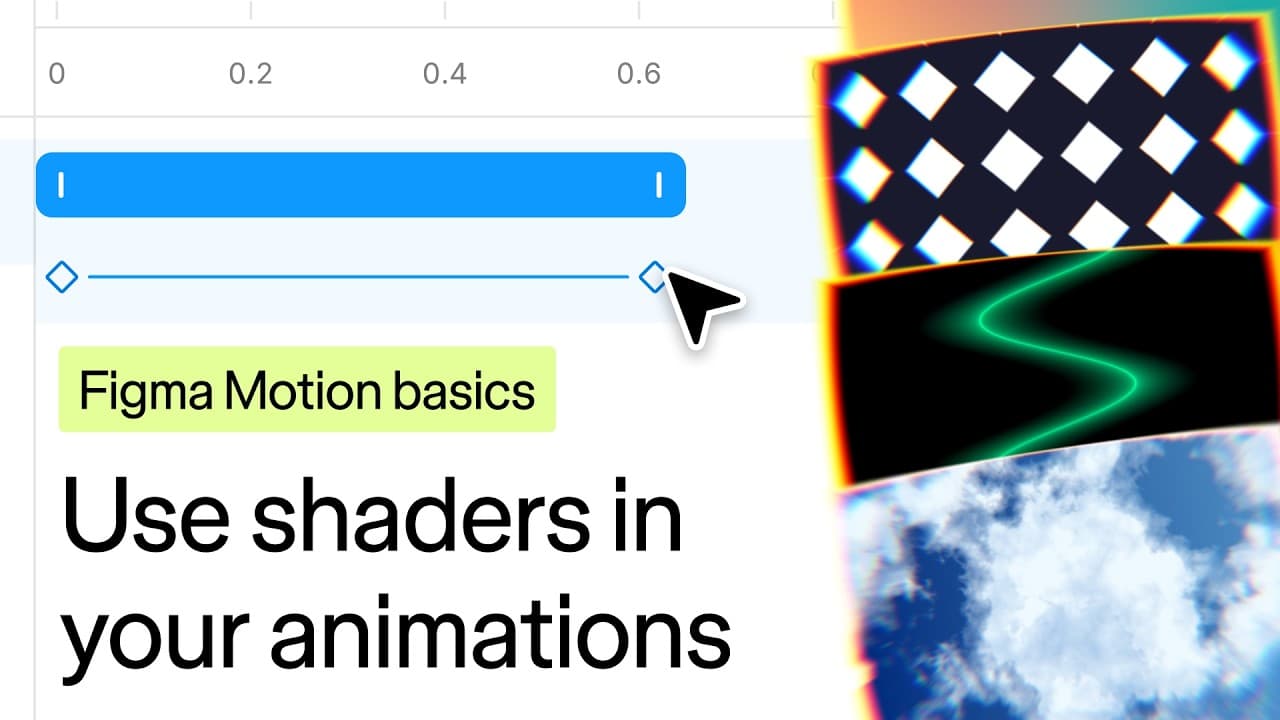
Figma introduces shader effects and fills powered by WebGPU, enabling designers to create custom visual effects like particle distortion, liquid metal, and generative patterns.
Your design system runs on one person’s judgment-AI is about to prove it
Design systems often rely on a single person's judgment to review contributions. AI tools are poised to automate this bottleneck and distribute governance.
How to create more expressive designs with Figma AI
Figma demonstrates new AI capabilities for creating expressive designs, including custom shaders, branded imagery generation, and motion design features.
A short history of modern brand design
Explores the development of modern brand design and visual identities from the 19th century to today.
Building beautiful UI using AI (My design workflow)
A walkthrough of using AI tools to streamline the UI design process and create visually appealing user interfaces.
Roundtrip in 5 minutes: Code to canvas with third party agents | Show your work
Learn how to convert code to design canvas and back using third-party agents in Figma with tips from their education designer.
How DesignOps roles are changing with new priorities
DesignOps roles are evolving as AI integrates into design workflows, requiring teams to prioritize design vision alongside new technological capabilities.
Your banking app is lying to you
Banking apps show current balances but not future financial states. An exploration of how AI could provide more truthful, predictive financial information.
The organizational cost of low taste
Explores how organizations without shared quality standards face decision paralysis, increased complexity, and talent loss, arguing taste is a missing variable in scaling.
Access is not mastery, the polymath UX architect, A2UI under the hood
A curated design resource collection exploring how access to AI tools doesn't equal mastery, and how senior designers provide judgment beyond shortcuts.
What sits on the engawa
An exploration of designing for future user needs and desires that haven't yet been articulated or imagined.
Why the best part of the flow isn't the end
South Korea's dopamine sites let users experience the satisfaction of ordering food without actual transactions, revealing how UX flows can be rewarding beyond completion.
Two modernisms
Explores how modernist design principles from architecture, cartography, and digital design stripped away complexity to reveal essential truths.
Musician and YouTuber Hainbach on ‘Breath of the Wild’ and Swiss Army Knives
German experimental musician Hainbach creates avant-garde music using salvaged laboratory equipment and scientific instruments, describing his unconventional approach as the 'Dark Souls of synthesis.'
Enterprise software is getting personal
Enterprise software is adopting personalization through three key design trends that improve user experience and engagement.
Incentive Structures for Diary Studies
Guide to structuring incentives for diary study research to maximize participant engagement and data quality while minimizing attrition.
One skill separates the designers who survive 2026 from the ones who don’t
UX designers must evolve into builders and system thinkers to remain relevant as AI automates design tasks. The article examines how converging responsibilities between designers, PMs, and engineers are reshaping the role.
Your strategic guide to winning design awards
A strategic roadmap for designers to leverage design awards as career and business growth opportunities.
A2UI under the hood: Designing for the new era of radically adaptive UI
Explores A2UI, a protocol enabling generative UI that adapts interfaces in real-time to individual user requests rather than static designs for everyone.
While everyone talks about AI, design is gaining power
Major tech companies are elevating design from support function to strategic leadership, appointing Chief Design Officers across Microsoft, Meta, Samsung, and beyond.
CSS Buttons
A collection of over 100 unique button styles with ready-to-use code for web projects.
Content, Components, and CMS with Framer Agents
Framer demo showcasing AI agents that automate design tasks like image replacement, component creation, CMS integration, and content management while keeping designers in control.
Generation, layout, and styling with Framer Agents
Framer's canvas agent uses AI to generate UI sections, pages, and animations while designers co-edit and focus on creative decisions.
Designing With Uncertainty: How AI Supercharges Probabilistic Thinking
Explores how designers should interpret AI outputs as probabilistic signals rather than certainties, using practical frameworks to build more adaptive and safer user experiences.
How one of the oldest design portfolio formats needs to change in 2026
Explores how the before/after format in design portfolios needs to evolve to better showcase what employers actually want to see.
The hidden UX of payments
How micro-moments in payment flows determine user trust more than branding, drawing on 13 years of financial product design experience.
The Core Skill of Design in the AI Era: Critique
Design critique becomes essential for AI systems, requiring well-defined evaluation criteria to encode user needs into generative AI products.
The Benefits Of Cognitive Inclusion In UX Research
Research study demonstrating how including people with cognitive disabilities in UX testing yields more actionable insights than general population testing.
The Hidden Why: Behavioral Economics for UX
Explore how behavioral economics frameworks can reveal hidden friction points in user experiences and drive better design decisions.
The Four Design Jobs AI Created (So Far)
AI has created four distinct design job types, from generating component variations to defining LLM behavior, each requiring different skills.
How To Make Your Design System AI-Ready
Guide on preparing design systems for AI by documenting decisions, auditing components, and using spec files to improve AI-generated prototype quality.
UX Conference September Announced (Sep 14 - Sep 25)
Nielsen Norman Group announces a UX training conference Sept 14-25, 2026, offering up to 5 in-depth courses on user experience best practices.
Using RAS to Guide UX Research Resource Allocation and Strategy
Framework for allocating UX research resources based on actual impact and adoption rates rather than intuition or output volume.
Closing the Loop: What to Do After a Design Critique Ends
Design critiques fail when teams skip the followup. Closing the loop on feedback is essential for building a healthy critique culture.
Four Levels Of Customer Understanding
A framework for understanding customer behavior by examining four layers beyond surface-level feedback, revealing hidden motivations and underlying reasons for user decisions.
UX Conference August Announced (Aug 17 - Aug 28)
Nielsen Norman Group announces UX training conference August 17-28, 2026, offering up to 5 in-depth courses on user experience best practices.
Small by Design: The Strength of Lean Design-System Teams
Lean design-system teams of 2-25 people can move faster and scale impact effectively when strategically planned, rather than being constrained by small size.
What Designers Actually Struggle with on Product Teams
Designers struggle most with alignment and cross-functional collaboration rather than design skills, lacking training for organizational work.
Ten Data-Backed Truths Of User Experience ROI
Data-backed analysis of how user experience directly impacts business metrics like revenue, retention, and customer acquisition costs.
Designing AI Agents: 4 Lessons from China’s Qwen Agent
A usability study of Qwen's AI agent reveals 4 key design lessons for building practical AI assistants that users can trust and navigate effectively.
UX Writing: FAQs from Practitioners
Practical guidance on UX writing best practices, covering plain language, readability standards, and real-world practitioner insights from Nielsen Norman Group's training.
The UX Designer’s Nightmare: When “Production-Ready” Becomes A Design Deliverable
UX designers face mounting pressure to become "design engineers," blurring lines between design and engineering as AI reshapes job requirements and industry expectations.
Identifying Necessary Transparency Moments In Agentic AI (Part 1)
Guide to designing transparent user interfaces for agentic AI systems, balancing clarity with usability through decision node audits and impact matrices.
The Site-Search Paradox: Why The Big Box Always Wins
Why internal site search fails users and how poor UX design causes them to rely on Google instead of navigating websites directly.
Testing Font Scaling For Accessibility With Figma Variables
Explores using Figma variables to integrate font scaling accessibility testing into everyday design workflows, making inclusive design practices seamless.
Modal vs. Separate Page: UX Decision Tree
A UX guide for choosing between modals and separate pages, covering when to use each pattern and how to minimize user disruption.
Persuasive Design: Ten Years Later
Anders Toxboe examines how persuasive design has evolved into behavioral design over the past decade, exploring what works, what doesn't, and modern frameworks for ethical product influence.
Now Shipping: Accessible UX Research, A New Smashing Book By Michele Williams
New Smashing Book on accessible UX research by Michele Williams teaches inclusive research methods, assistive technology integration, and disability considerations for product design.
Designing A Streak System: The UX And Psychology Of Streaks
Explores the psychological principles and UX design patterns that make streak systems addictive, including loss aversion, progress tracking, and FOMO.
Creating communal computers
Spencer Chang creates computing-infused objects and internet sculptures designed to bring people together around play, connection, and creation.