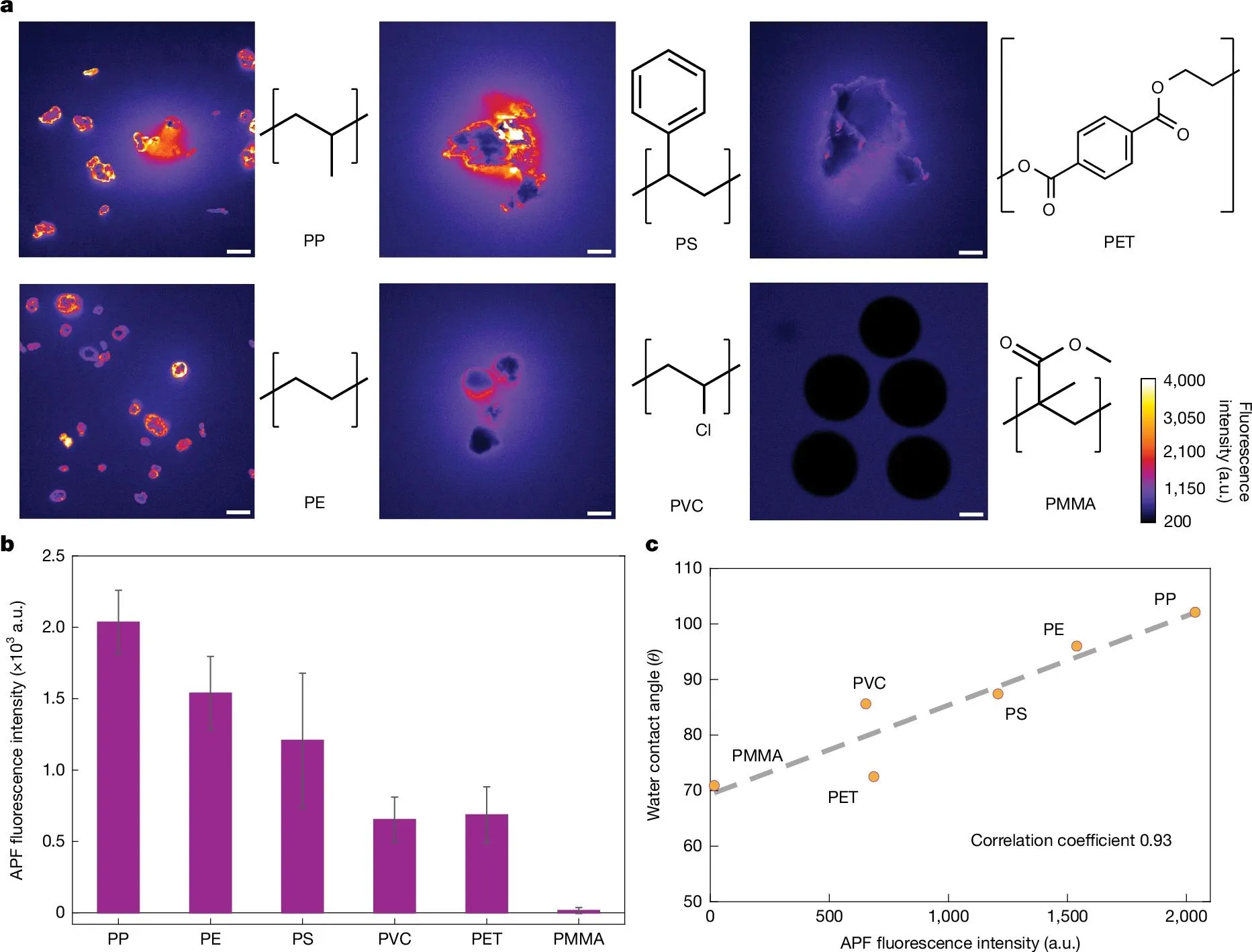
Plastics are not chemically inert in water. A study by Naixin Qian et al., published in Nature, identifies a previously unknown mechanism: common microplastics and nanoplastics generate hydroxyl radicals (HO•) at the plastic-water interface, driven by electrostatic effects. Six plastic types were tested, with more hydrophobic plastics producing higher free radical concentrations.
The implications compound quickly. The electrostatic field alone attracts charged biomolecules before free radicals enter the picture. When mouse red blood cells were exposed to polystyrene microplastics, fatal cellular damage resulted. That gives researchers at least three distinct harm pathways to investigate: electrostatic attraction, free radical generation, and direct cellular destruction.
The full paper is worth reading because the mechanism, not just the conclusion, is what matters here. Detection of microplastics in biological tissue remains unreliable, and this study offers a new chemical signature to work with. The debate over whether MNPs cause meaningful harm to humans is still live, and this research shifts the burden of proof considerably.
[READ ORIGINAL →]