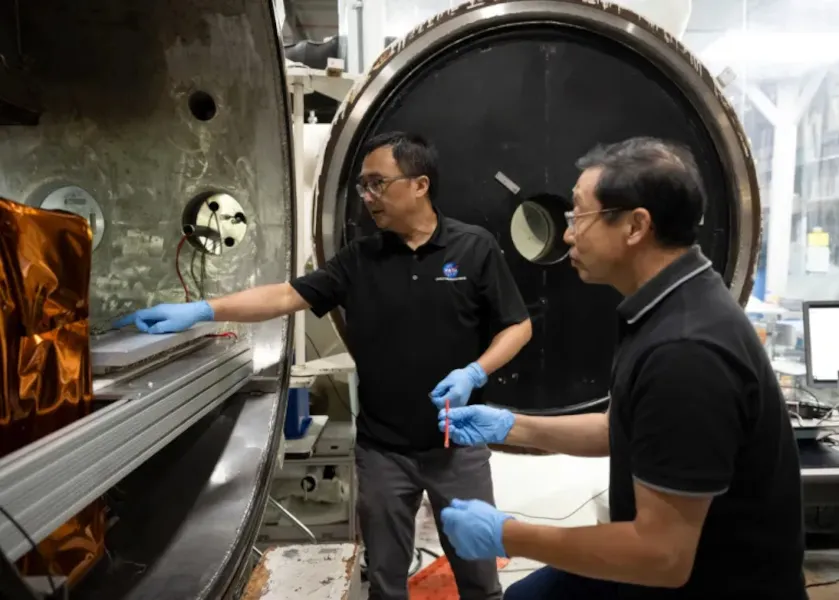
NASA Langley has developed solid-state batteries that operate at -60°C, survive storage at -170°C without capacity loss, and function up to 80°C. The electrolyte is either ceramic or polymer, both solid, which eliminates the freezing and cracking failures that kill conventional liquid-electrolyte cells in extreme environments.
The survival at -170°C is the detail worth sitting with. That is not the operating floor, that is the abuse threshold. A small heater brings the cells back to operating range with zero degradation reported. No liquid electrolyte technology gets close to that window without heavy thermal management hardware adding mass and failure points.
The target application is the lunar south pole, including permanently-shadowed craters where temperatures hold at exactly this range for extended periods. Secondary use cases include terrestrial cold environments where lighter thermal management translates directly to simpler, cheaper systems. The full NASA writeup covers the ceramic versus polymer tradeoffs and what the qualification testing actually looked like.
[READ ORIGINAL →]