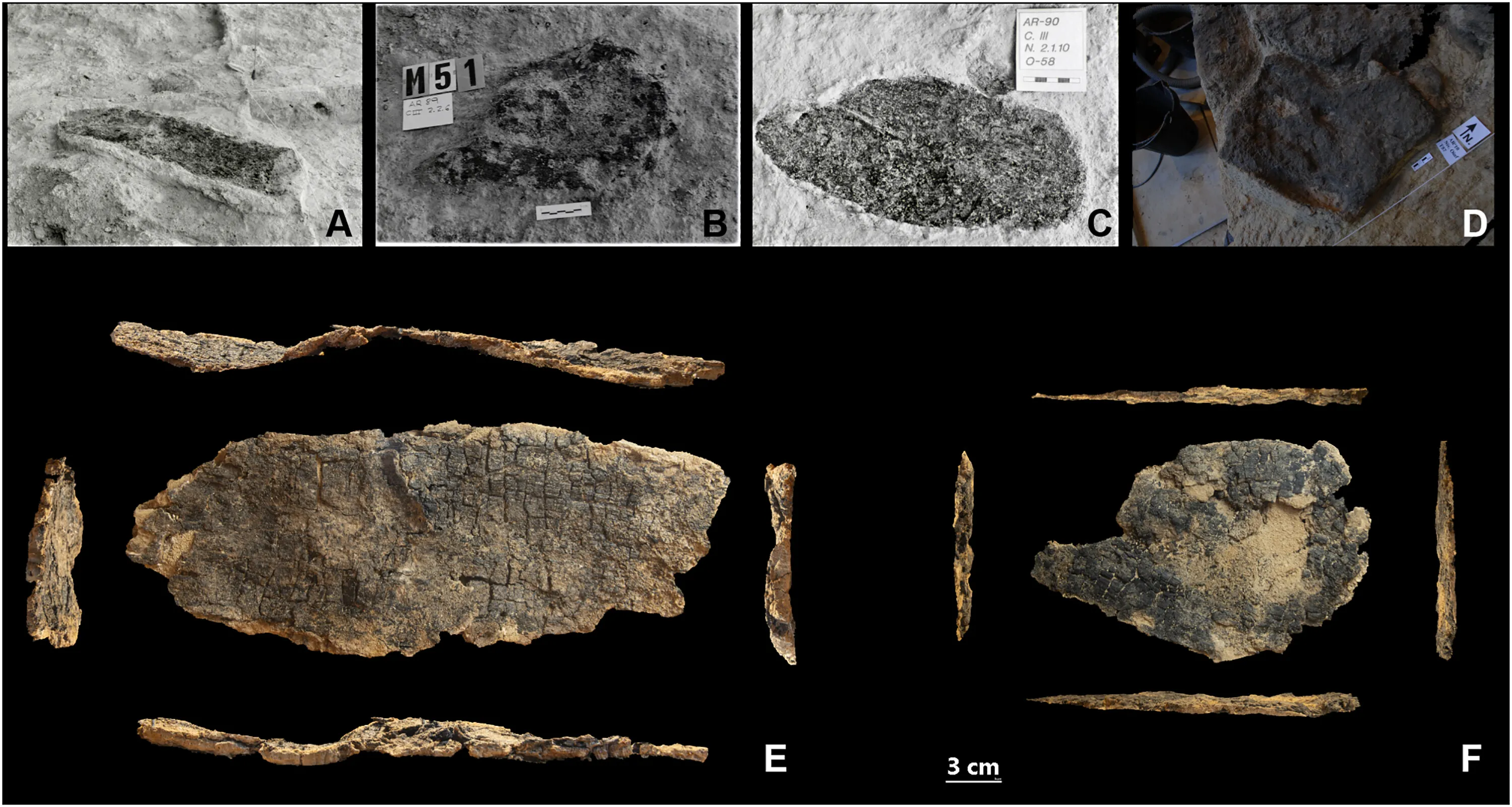
Researchers have catalogued 597 wooden imprints at Abric Romaní, a limestone cliff site in Spain, dating between 62,000 and 40,000 years ago. The paper, authored by Palmira Saladié et al. and published in Science Advances, documents the find in detail. Travertine deposits, a calcium carbonate byproduct of the site's geology, encased and preserved the wood across thousands of years of continuous humanoid occupation.
The imprints and partial remains reveal a toolkit broader than most assume for Neanderthals: spears, clubs, trays, and tripods. Enough organic material survived for researchers to identify the tree species used and, in some cases, which part of each tree was selected for which tool. That specificity is rare. Wood almost never survives this long, and 597 specimens from a single Middle Paleolithic site is not a small number.
The full paper and its supplemental PDF are worth reading for the stratigraphic breakdown and the species-level wood identification methodology. The site itself only exists in the archaeological record because an early 20th-century landowner with an interest in natural sciences chose to preserve it. That contingency alone should make you read the primary source.
[READ ORIGINAL →]