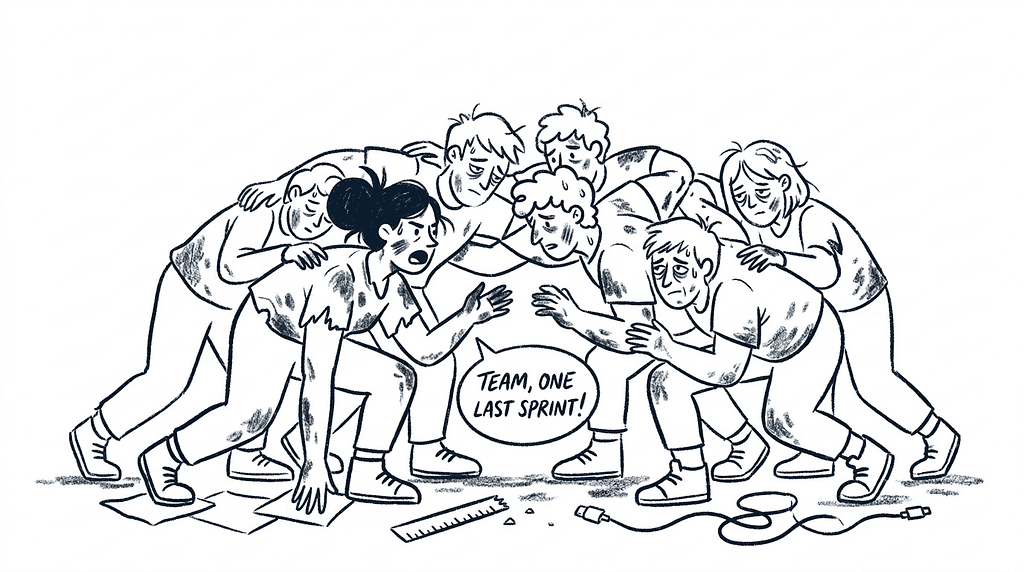
Design teams at tech companies share a structural problem that has nothing to do with talent: they arrive late, get positioned wrong, and are led by people promoted for the wrong reasons. A 20-year design leadership veteran writing in UX Collective breaks this down across two levels, company and team, identifying the specific friction points that keep design from delivering its actual value. The core argument is not that design is undervalued in theory. It is that the conditions companies create make it structurally impossible to succeed.
The piece identifies three company-level failures worth reading in detail. First, engineers ship functional products for years before design is hired, creating experience debt that the new team must triage immediately, often choosing between building a design system from scratch or patching the highest-risk user failures. Second, AI tools like vibe coding are now enabling 4-person teams to launch products without designers or engineers at all, compressing the window for design to prove its necessity. Third, companies reduce design to a visual translation service, where sales or CX interprets user needs and designers execute pixels, cutting them out of any strategic conversation entirely.
The team-level section on promotion without leadership skills is where the article earns a full read. The argument that fast execution or sole-designer status are not qualifications for leadership is uncomfortable and specific. The full piece also addresses how AI is being used inside companies as a justification to flatten design expertise into prompt writing, and why that creates operational problems that surface slowly and expensively. If you lead a design team, manage one, or fund a product, the diagnostic framework here is worth the 12 minutes.
[READ ORIGINAL →]