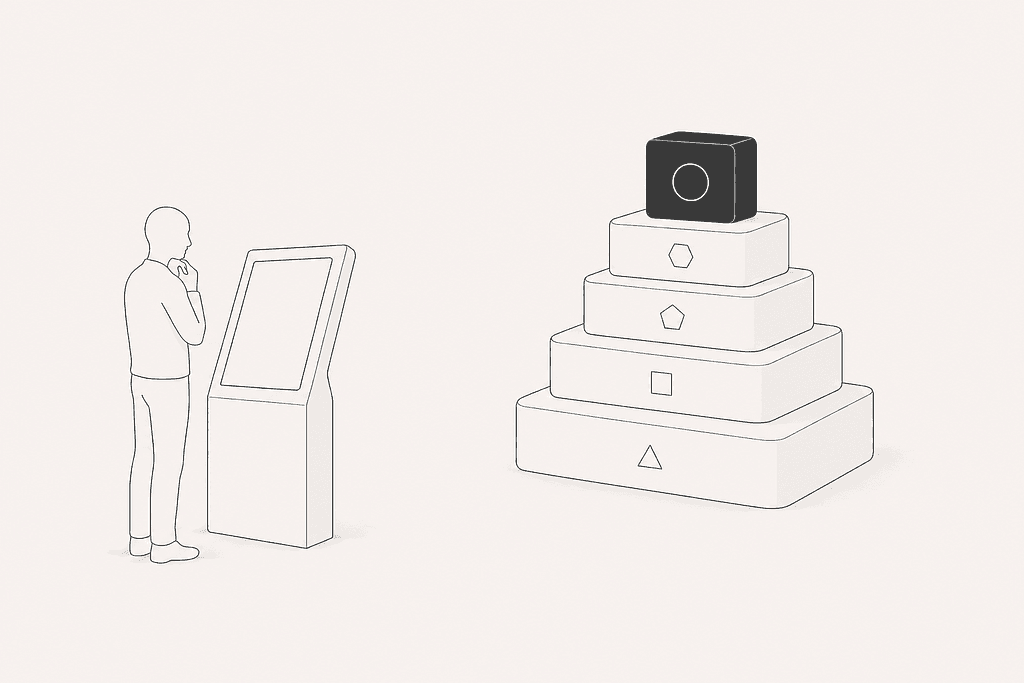
Authorship was always a fiction. The designer who wrote this piece spent an afternoon running 20 iterations with Claude on a single UX flow problem, reaching a solution at iteration 20 that was measurably better than what they would have shipped at iteration 5, which is where solo work under pressure typically stops. The uncomfortable question the piece refuses to close quickly: whose idea is that?
The answer runs through Andy Clark and David Chalmers' extended mind thesis from 1998, Kirby Ferguson's 'Everything is a Remix,' Roland Barthes, and the psychology concept of cryptomnesia, the moment you remember an idea but forget its source so it feels original. The argument is not that AI complicates authorship. It is that AI makes visible what was always true: taste is assembled from designers you worked under, books, bad feedback from managers who were right, CD covers you stared at as a teenager, folders of saved images you forgot existed. You never generated your instincts. You absorbed them until the labels fell off.
The piece earns a full read because it does not land on 'use AI more' or 'AI is a collaborator.' It lands somewhere harder: the iteration loop is useful, but you cannot live inside it. Feed it less life, fewer users, fewer strange references, less silence, and the loop outputs faster versions of shallower material. The real question is not whether the idea is yours. It is whether the final thing is still recognisably yours after passing through so many other things. That distinction is worth sitting with.
[READ ORIGINAL →]