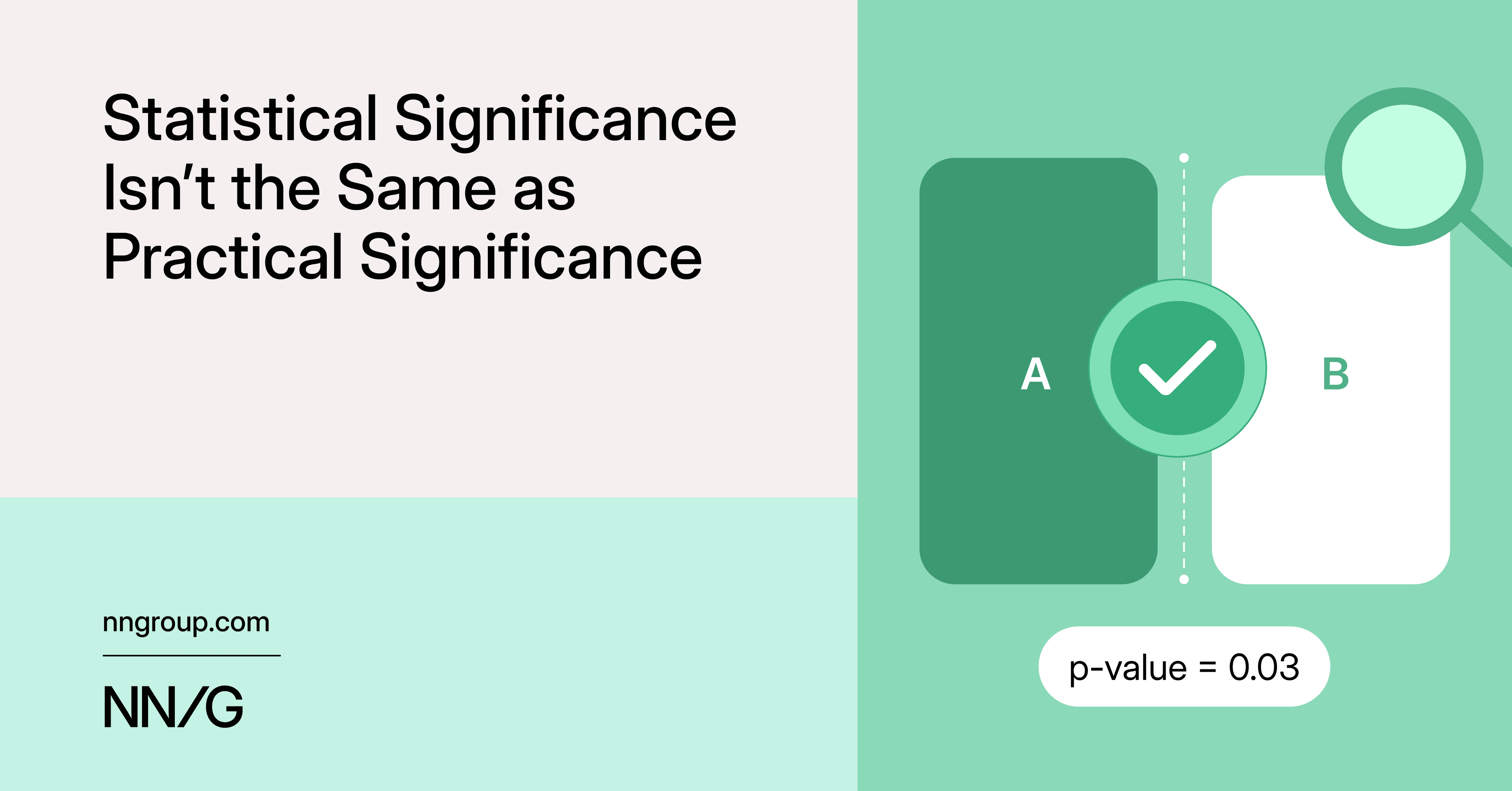
Statistical significance and practical significance are not the same thing. One tells you a result is unlikely due to chance. The other tells you whether that result is worth acting on. Conflating them is a common and costly mistake in UX research.
A result can clear the p-value threshold and still mean nothing to users, product teams, or business outcomes. Nielsen Norman Group breaks down exactly why this distinction matters in quantitative usability studies and surveys, where sample sizes large enough to detect tiny effects can make trivial differences look important.
The full article gets into the mechanics of both concepts, how to evaluate effect sizes, and when a statistically significant finding should actually change a product decision. If you run or commission any form of quantitative UX research, this is required reading.
[READ ORIGINAL →]