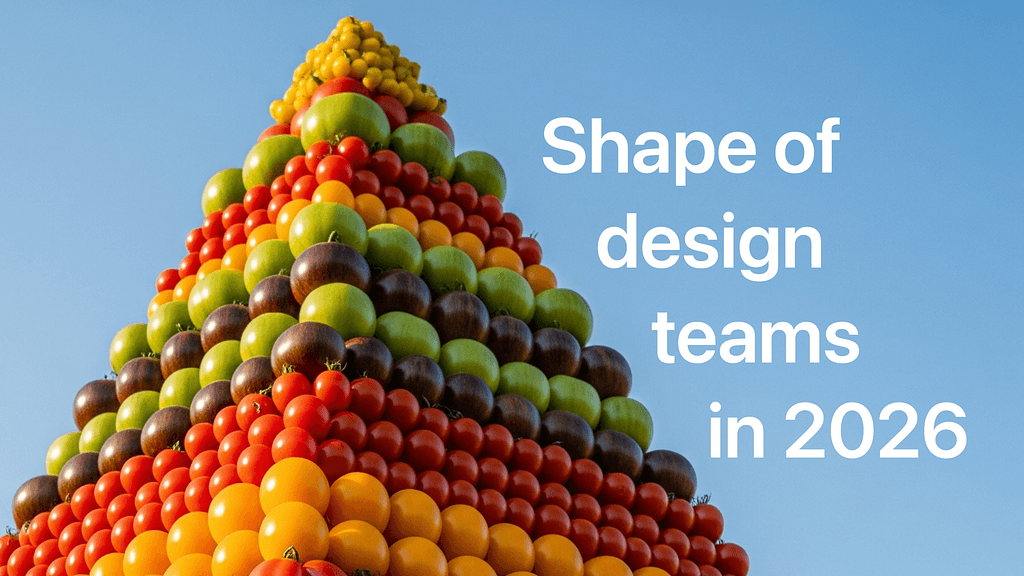
Anthropic design head Jenny Wen declared the traditional design process dead, and the fallout is now structural. NNGroup researchers Sarah Gibbons and Huei-Hsin Wang pushed back, naming the 'Master Effect': senior designers like Wen compress discovery, accessibility checks, and user flow analysis into instinct because they have run the formal process hundreds of times. The problem is not the masters. It is everyone below them.
Juniors who skip foundational steps to vibecode their way through briefs are not building intuition. They are borrowing it from a model. Employers notice, sidestep entry-level hires, and reach for seniors. But seniors are a lagging indicator. When no juniors develop into seniors, the pipeline collapses. The workforce hollows out from the bottom. Meanwhile, AI is compressing organizational structures from the top: a single contributor can prototype in an afternoon, but three approval layers can erase that advantage before end of day. The article names this the 'Permission Tax,' framing waiting time as a more expensive resource than the build itself.
The piece argues organizations need a 'dual transformation' model: a fast, experimental 'atomic' structure for rapid iteration, anchored by a stable core that preserves institutional knowledge and junior development. A 'Capability Link' bridges both. The full read is worth it for the specific organizational diagnostics, including how blurred roles and hierarchy friction are forcing a redefinition of what a team even is, and what John Maeda, Jenny Wen, and NNGroup all agree the next designer will look like.
[READ ORIGINAL →]