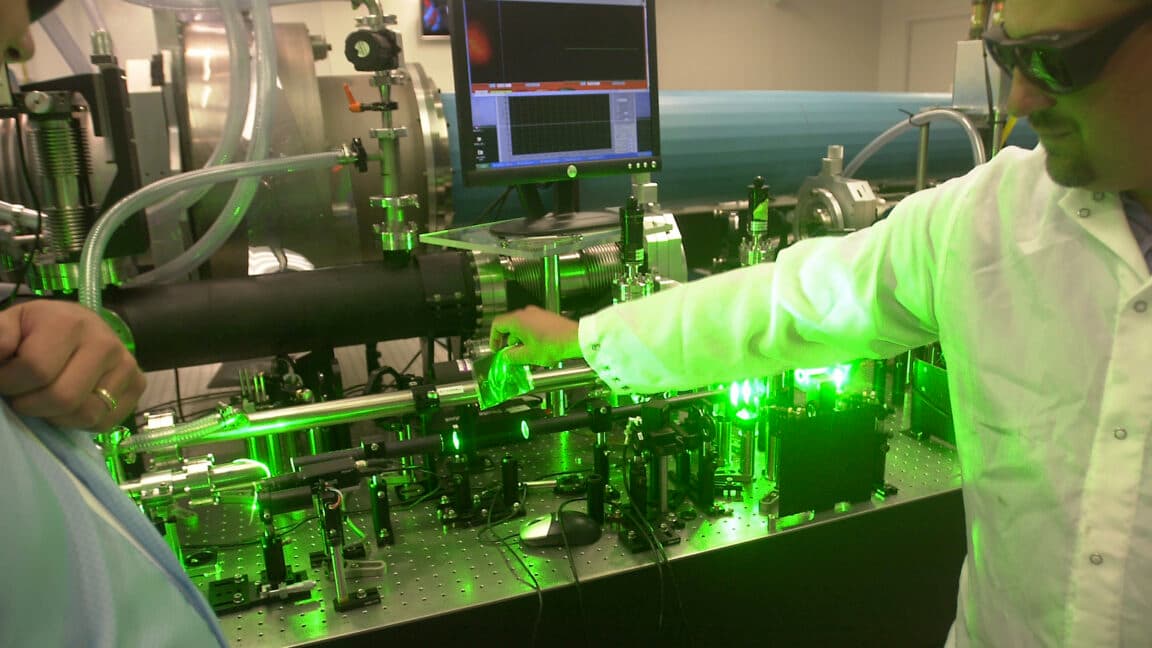
Two floors beneath the University of Texas at Austin campus sits the Texas Petawatt laser, one of the most powerful in the United States, now closed due to funding cuts. The author was its lead laser scientist from 2020 to 2024, making this a firsthand account, not a press release.
The Texas Petawatt was part of LaserNetUS, a Department of Energy network of high-power laser facilities. The system works by stretching a light pulse to protect optics during amplification, then compressing it to a trillionth of a second, producing peak power that exceeds the entire US electrical grid, briefly creating plasma conditions resembling a star inside a vacuum chamber.
The real reason to read this piece is not the physics summary. It is the procedural detail of what a shot day actually looks like from the operator side, a perspective almost never documented publicly, at a facility that may not reopen.
[READ ORIGINAL →]