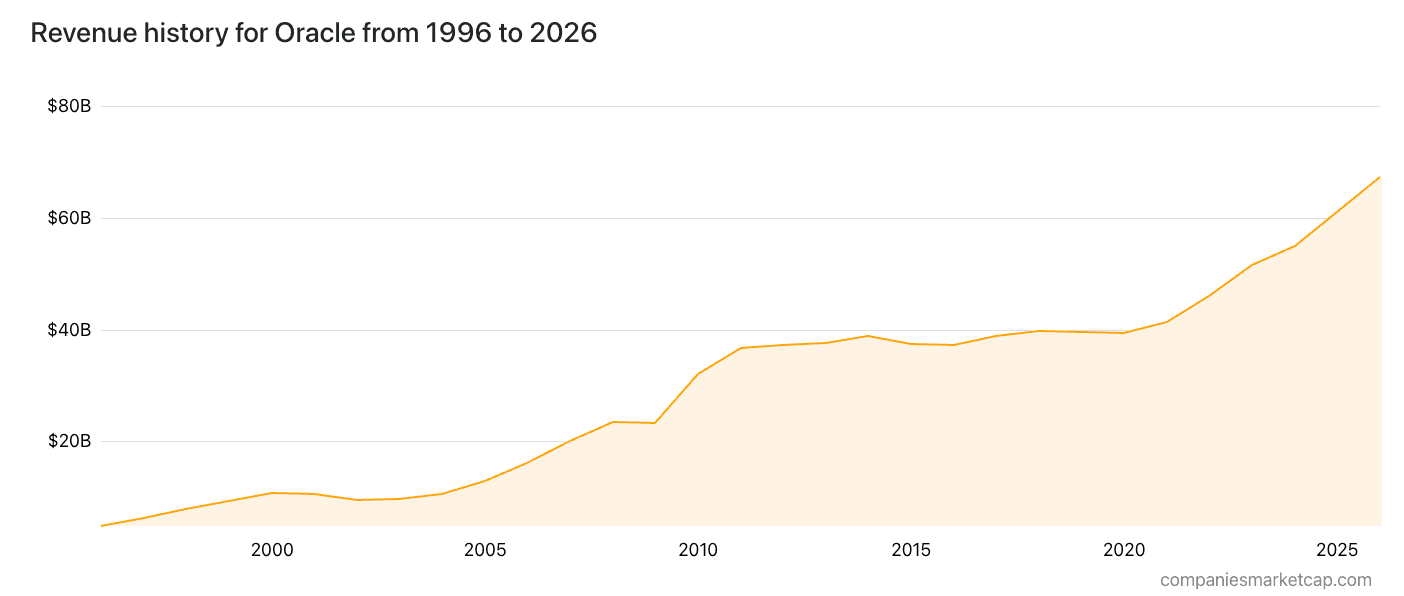
Oracle is dying. Not slowly, not metaphorically: the company has been in structural decline for close to a decade, surviving on $85 billion in acquisitions, aggressive customer price extraction, and accounting practices that forensic accountant Howard M. Schilit has documented as deliberate concealment of a deteriorating business.
The numbers are specific and brutal. The 2009 acquisition of Sun Microsystems for $5.7 billion bought Oracle nearly flat revenue growth until 2021, when the $28.3 billion Cerner deal added roughly $6 billion in annual revenue at margins 40% lower than Oracle's core business. Since mid-2020, Oracle has spent over $99 billion in capital expenditures on AI GPUs, and those GPUs are destroying the margins that once made the company look healthy. Every major product line outside the core database is stitched together from other companies' work, held in place by legendary customer contempt and relentless price increases.
This piece is a sequel to the Hater's Guide To Oracle and goes further than the conclusion you just read. The original article works through how Oracle's cloud infrastructure unit, its ERP business, its Java licensing operation, and its OpenAI commitments interact to form something that looks less like a technology company and more like a leverage scheme. Read it for the margin charts alone.
[READ ORIGINAL →]