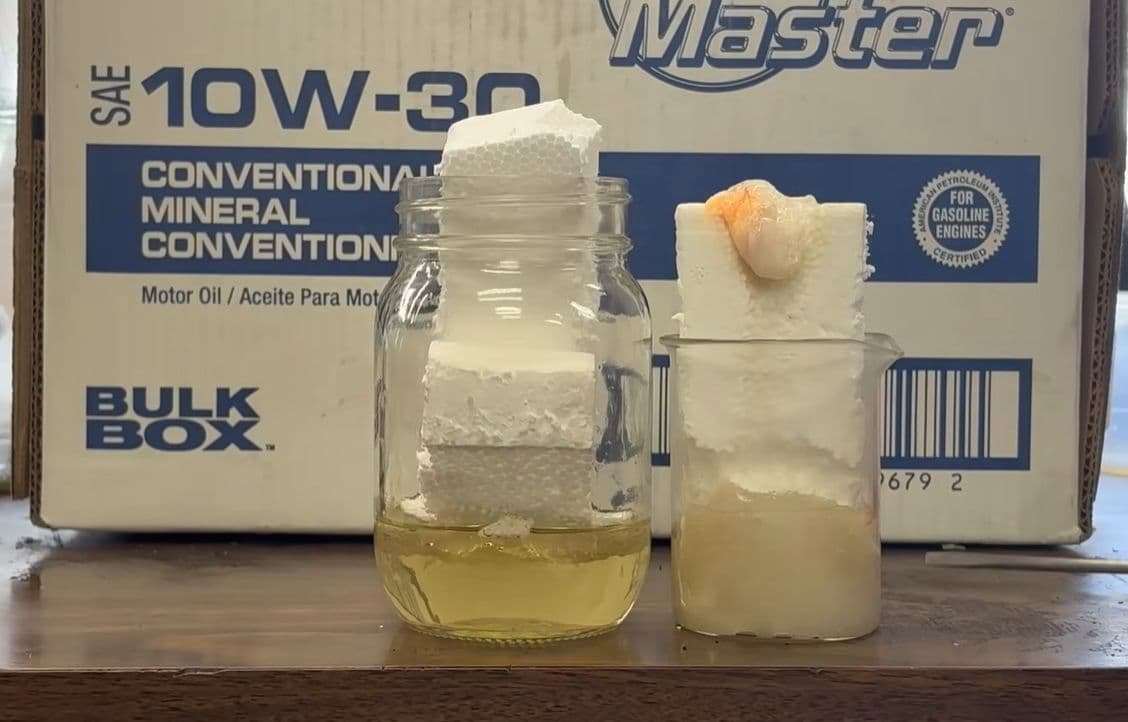
Polystyrene waste can be converted into functional gasoline using pyrolysis and distillation, and the YouTube channel Lowered Expectations has documented the full process. The chemistry is straightforward: polystyrene is a hydrocarbon polymer, and gasoline is a mixture of hydrocarbon chains. The first step dissolves XPS foam in previously recovered stale gasoline, producing a thick slurry that feeds directly into the distillation flask.
The resulting distillate passes a spark ignition test and runs a gasoline generator. That is where the good news ends. A borescope inspection of the engine cylinders revealed shiny, gummy residue buildup. The fuel also contains styrene monomers, C8H8, a known mutagenic toxin that off-gasses from the fuel itself and persists in the exhaust stream. Auto-polymerization of those monomers requires dedicated chemical inhibitors to control.
The value of reading this one is in the process detail, not just the result. The piece walks through why each step exists, where the real hazards concentrate, and what a functioning but damaging test run actually looks like inside an engine. It is a useful case study in the gap between chemically possible and practically viable.
[READ ORIGINAL →]