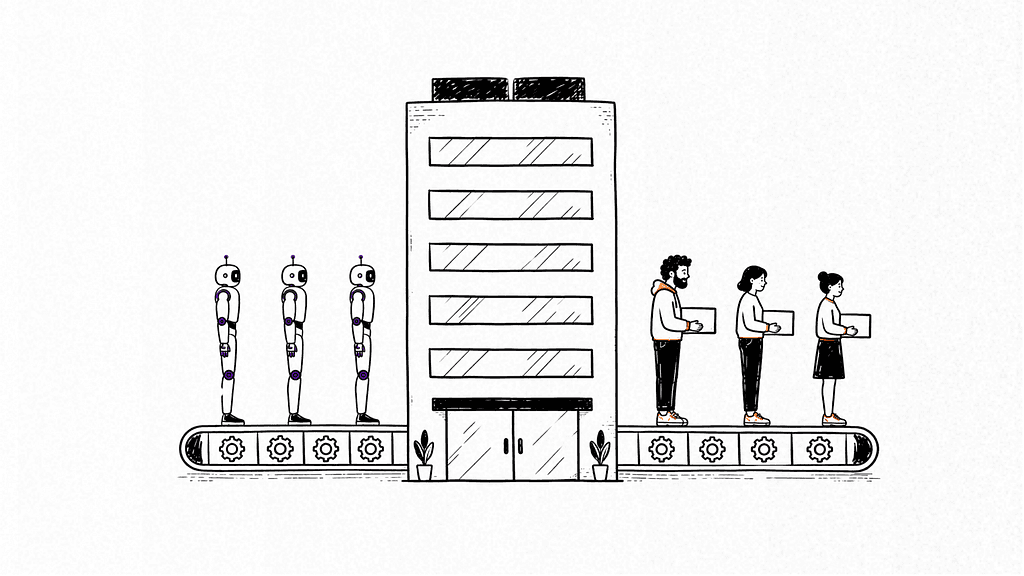
Thirty-two percent of organizations that made AI-linked redundancies have already had to rehire, according to a March 2026 Orgvue study. Klarna cut its headcount in half, replaced 850 customer service workers with an OpenAI-built agent, and is now hiring humans back. Gartner forecasts that by 2027, half of companies that cut customer service staff citing AI will rehire under different titles. The pattern is documented, repeatable, and expensive: companies declared victory over a capability AI did not yet have, and are now paying more to recover the institutional knowledge they destroyed.
The design profession is inside this same cycle, but with an added structural pressure. The World Economic Forum's Future of Jobs Report 2025 ranks UX designer eighth among the fastest-growing roles through 2030, even as entry-level prototyping and production work is being permanently absorbed by tools. The Design Executive Council's AI Shift report, drawing on interviews with senior design leaders at JPMorgan, Cigna, Sephora, Amazon, and AT&T, is specific about what replaces that work: designers are now expected to function as system architects and ecosystem orchestrators, arguing about confidence thresholds and failure modes in rooms full of machine learning engineers and data scientists.
The article is worth reading in full because it does not stop at the diagnosis. SAP Chief Design Officer Arin Bhowmick works through what systems thinking actually demands from designers at each career stage, why hollowing out the entry-level pipeline creates a senior talent shortage in the next decade, and what it means to design the behavior of an AI system rather than a static interface. The argument is direct and the professional stakes are specific. That is what makes it useful.
[READ ORIGINAL →]