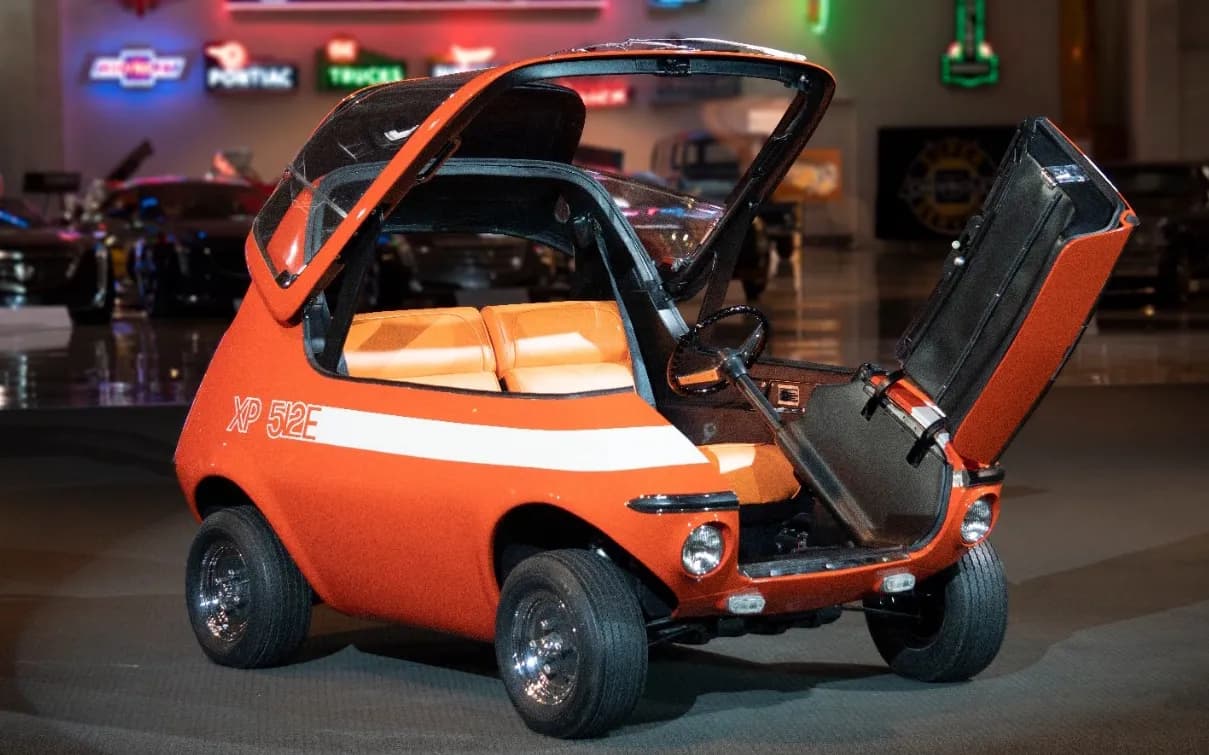
In 1969, GM built a working electric commuter car called the XP-512E, capped it at 30 mph and 50 miles of range, then buried it. The vehicle weighed 1,250 lb, stretched only 83 inches long, and used a fiberglass body over a steel chassis. Lead-acid batteries were the ceiling of what traction technology could offer, and that ceiling was low.
The XP-512E was one of three variants spun from the same XP-512 platform, alongside conventional and hybrid versions. GM was not committed to any single drivetrain. The two-seat cockpit accessed via a canopy that lifted upward and a front-mounted side-swinging door. At the same time, AMC was running parallel experiments with the Amitron, and GM itself was investigating steam power as a smog reduction strategy, because V-8 sedans were choking American cities.
The full piece is worth reading for the engineering constraints alone: the gap between a 1969 lead-acid pack and a modern lithium cell explains decades of EV failure in one paragraph. The XP-512E and the Amitron never reached production, but they document exactly how long a technology can sit on a shelf before conditions finally catch up to the idea.
[READ ORIGINAL →]