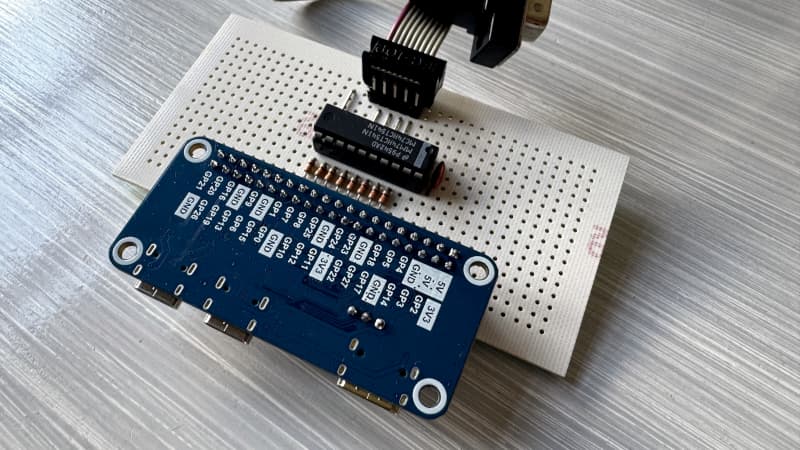
An RP2350 microcontroller now bridges TTL RGB video to DVI output, solving a hardware compatibility problem that has frustrated vintage computer users for decades. Developer Charlysan built pico-ttl2dvi using the RP2350's PIO state machines to sample TTL input into a framebuffer, then hands DVI signal generation to the PicoDVI library running on the same chip. The target board is the Waveshare RP2350-PiZero, chosen specifically because it ships with an HDMI socket already onboard.
The minimum hardware overhead is a resistor-based level shifter to translate TTL logic voltages to something the RP2350 can safely accept. A USB serial terminal handles configuration, and a Tk GUI script wraps that interface for users who want it. The full schematic and code are public on GitHub.
What makes the project worth reading in full is the implementation detail: how PIO sampling, framebuffer management, and DVI generation coexist on a single RP2350 without stepping on each other. A previous project called MCE Blaster solved the same TTL problem but targeted VGA output instead. This one goes straight to DVI, making modern display compatibility straightforward rather than a two-step conversion.
[READ ORIGINAL →]