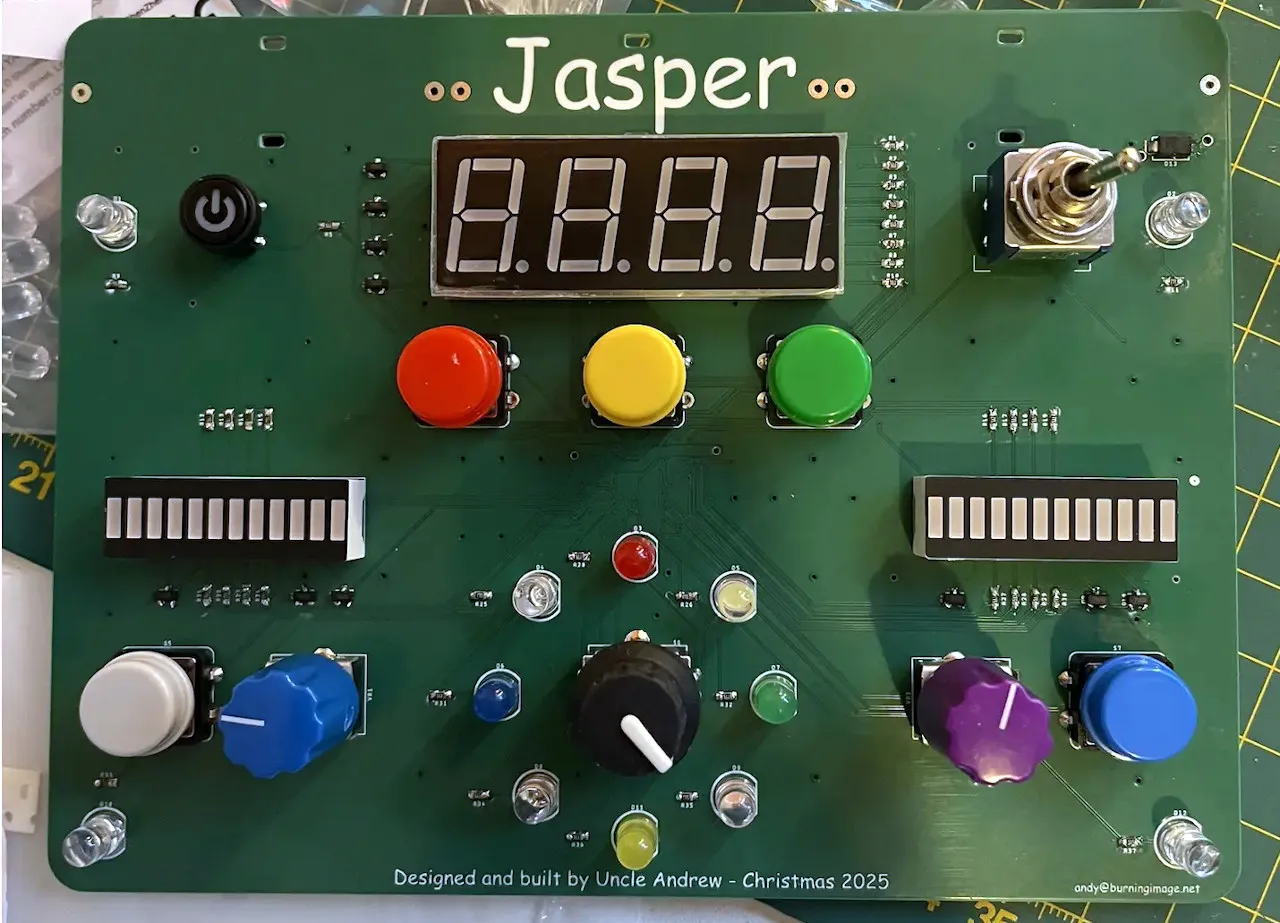
A maker called Andy built a scratch-designed electronic busy board for his nephew last Christmas, and the project writeup is worth your time precisely because it is not complex. It is a disciplined exercise in constraint: keeping the PCB to two layers, implementing LED multiplexing, and squeezing maximum runtime from a PIC18F67K40 microcontroller running on three AAA batteries.
The software section is where the piece earns its keep. Andy walks through how timers and interrupts carry the computational load, a genuinely useful primer for anyone trying to extend battery life on a microcontroller project without throwing more hardware at the problem. The decision to offload logic to firmware rather than build pure hardware solutions is documented with enough specificity to replicate.
The full writeup at burningimage.net covers the design rationale from PCB layout through to firmware architecture. Read it for the battery efficiency approach and the LED multiplexing decisions, not just the finished toy.
[READ ORIGINAL →]