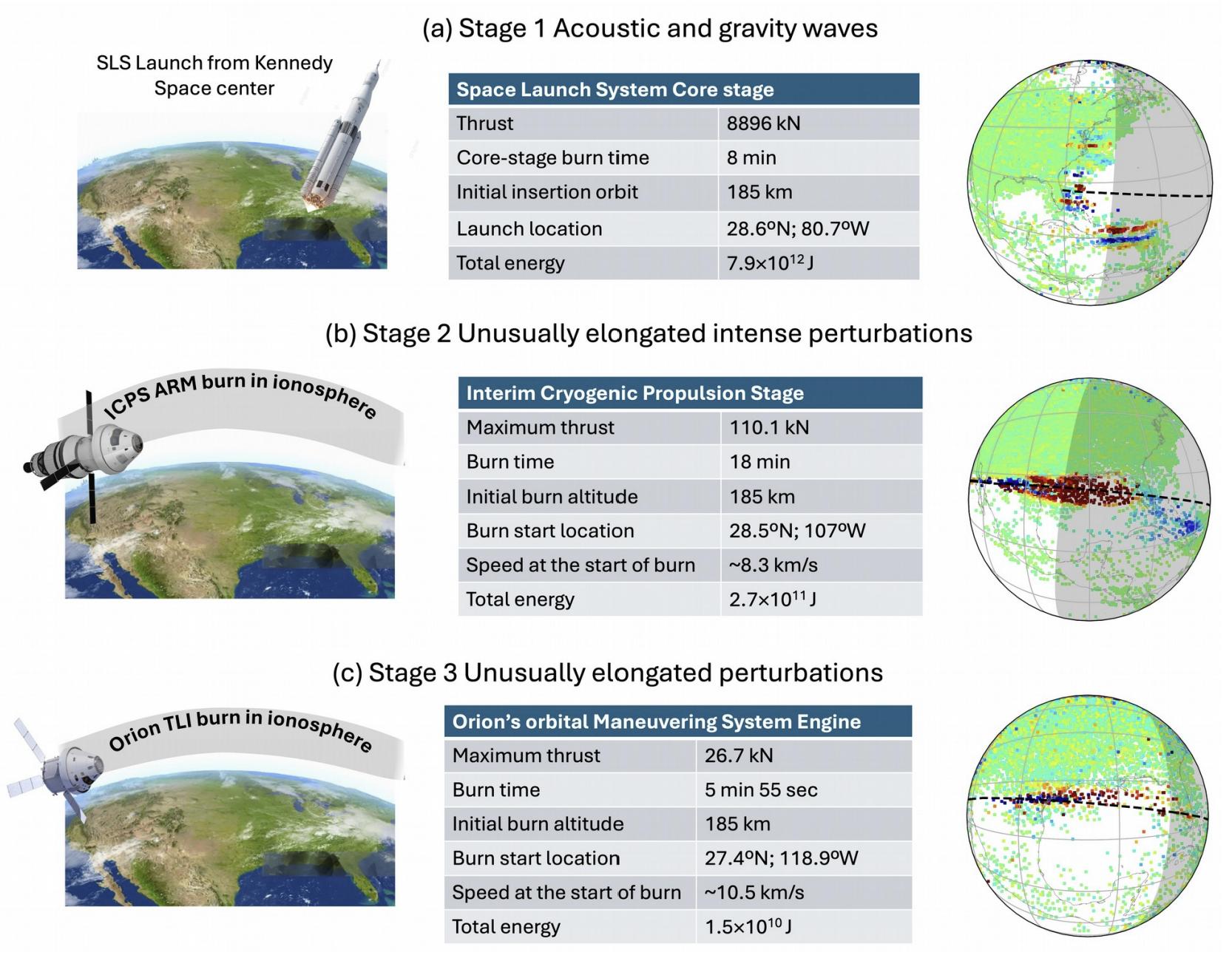
The Artemis II Space Launch System generated ionospheric disturbances large enough to disrupt GPS signals, according to a new pre-print study analyzing the rocket's atmospheric impact. The upper-stage burns punched holes in the ionosphere detectable across the entirety of North America.
The effects arrived in stages, literally. The first stage produced minimal ionospheric impact due to its low altitude burn. The second and third stages hit harder, generating gravity waves that propagated continent-wide and creating ionospheric depletions that researchers say could have sustained GPS signal disruption during the window of the burns. The study used thousands of ground-based sensors to track these effects, which the authors categorize under the term 'anthropogenic space weather.'
This matters now because launch cadence is increasing, not decreasing. One Artemis creates a measurable hole in the ionosphere. The original paper is worth reading for the sensor methodology alone, and for the data showing exactly how each SLS stage contributed differently to the disturbance profile. The question the authors leave open: what happens when launches like this stop being rare events.
[READ ORIGINAL →]