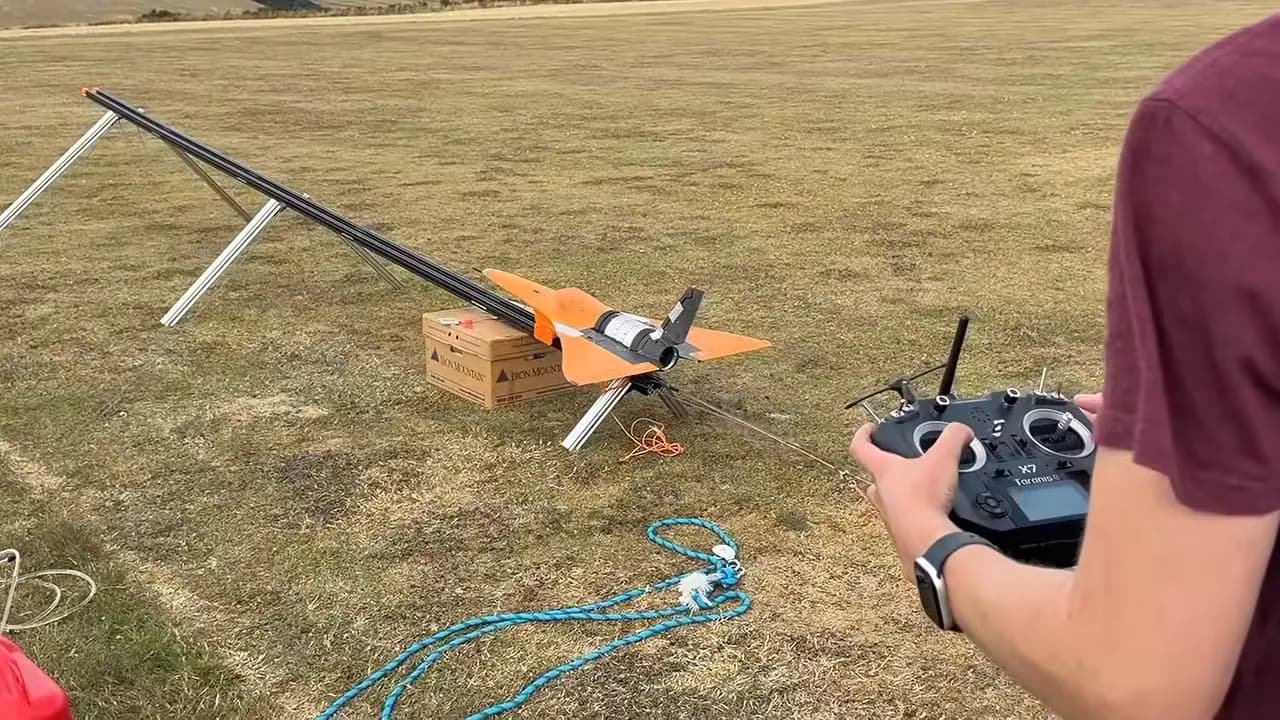
The Mach Initiative is building Kingchaser, a 3D-printed R/C jet targeting Mach 0.8, roughly 990 km/h. The airframe is primarily PETG with carbon fiber rods and an aluminum frame for structural load. The motor section uses PPS-CF, polyphenylene sulfide with carbon fiber, then wrapped in additional carbon fiber to survive the heat. The engine produces 300 N, or 68 lbf, of thrust.
This is not a first attempt. The team previously flew Kingfisher, a smaller PLA-based jet they claim was the first 3D-printed jet to fly. Kingchaser is the scaled-up follow-on, and the engineering decisions between the two versions are where the real story lives. PETG replaced PLA specifically to handle aerodynamic heating at transonic speeds. The entire skin has been polished smooth because skin drag dominates at this speed regime, a detail most 3D-printed aircraft projects never bother with.
If Kingchaser hits anything close to its design speed, it will decisively beat the current world record for fastest drone, a 626 km/h quadcopter. The embedded video documents the full design and build process and is dense with the specific tradeoffs required to chase that number. More flights are coming.
[READ ORIGINAL →]