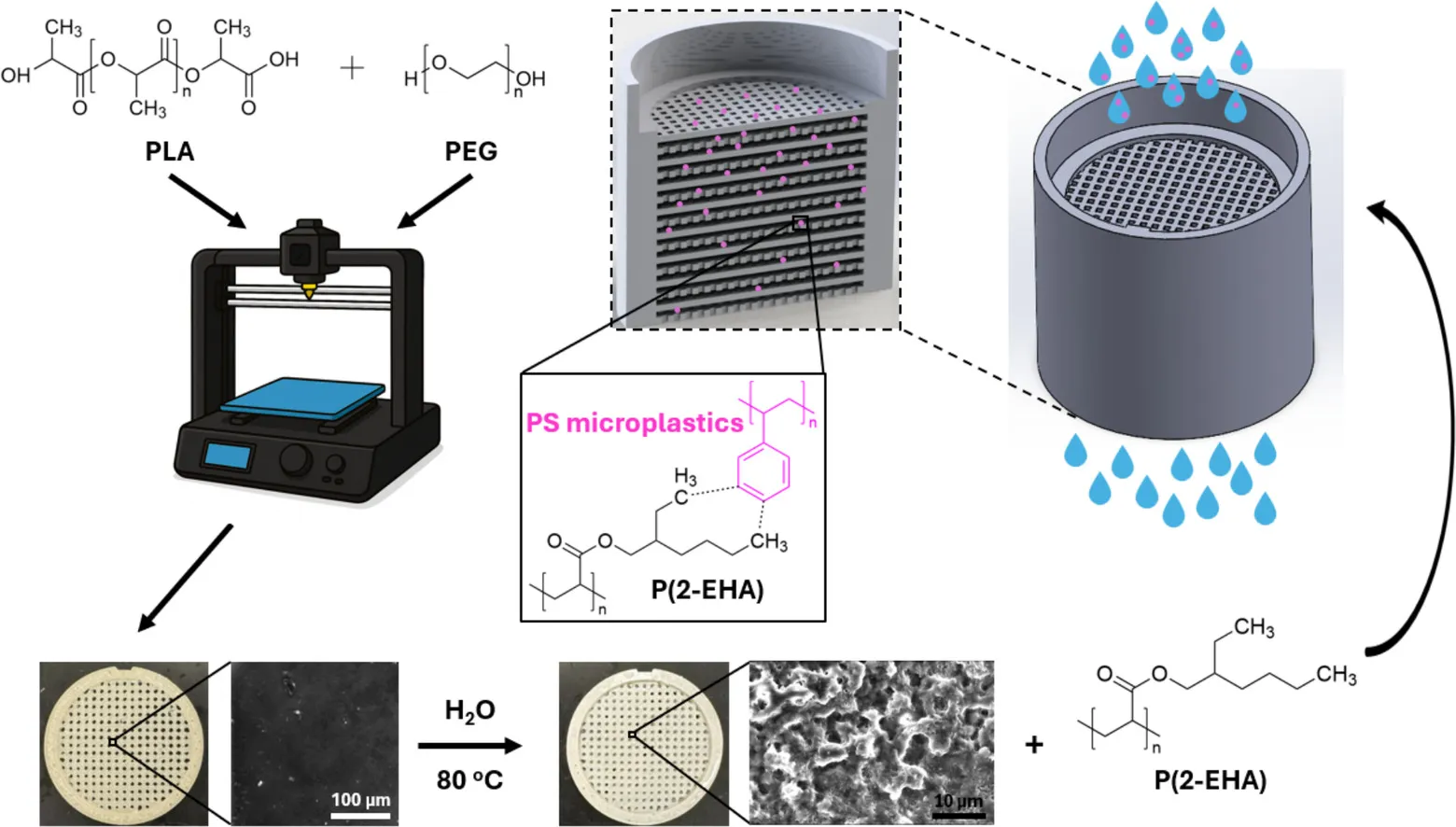
A 3D-printed PLA filter removes up to 90% of micro- and nanoplastics from water using a 20-layer flow-through design. The work, by Ethan A. Crawford et al., published in Separation and Purification Technology, solves a core FDM limitation: the layer resolution is too coarse to produce filtration-grade pores directly.
The fix is chemical. Polyethylene glycol mixed into the PLA filament forms spherical inclusions during printing. A post-print soak in 80-degree Celsius water dissolves the PEG, leaving a porous surface that catches fine particles. The PLA-PEG10 formulation produced the best balance of pore structure and structural integrity. No exotic equipment required.
The 90% efficiency figure is the headline, but the paper is worth reading for its pore characterization data and the honest list of what remains unsolved: system optimization, backpressure behavior, and reusability. Those open questions are where the real engineering work begins.
[READ ORIGINAL →]