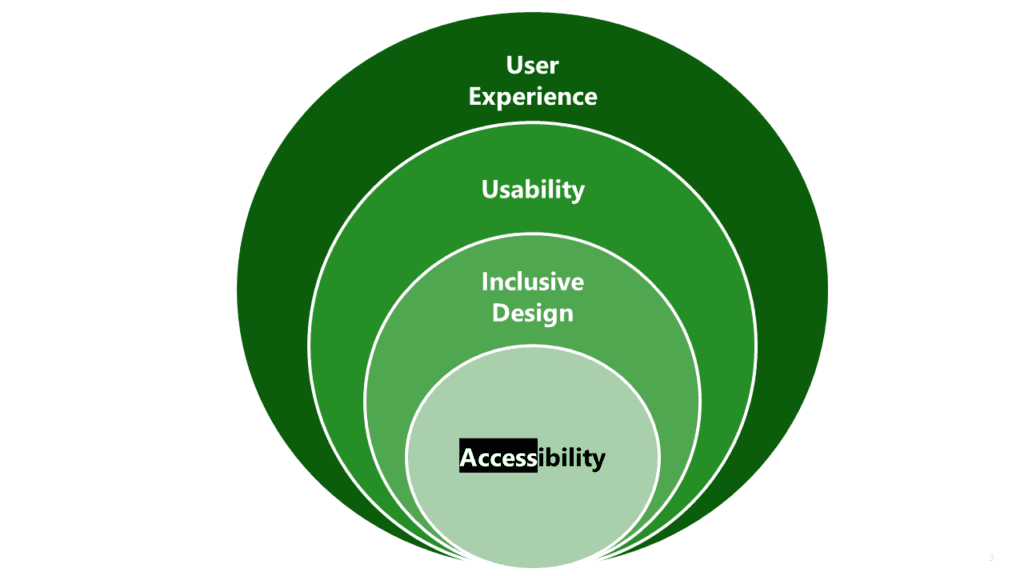
A senior development leader told UX designer Zeeshan, mid-meeting, that accessibility is not separate from UX and that information architecture covers it. It does not. ISO 9241-11 defines usability as performance for specified users under specified conditions. That conditional framing is the trap. A banking app optimized for tech-savvy professionals can score high on usability metrics and still be completely unusable for the 1.3 billion people globally living with some form of disability. The article names this gap precisely: usability measures quality of experience, accessibility determines whether the experience exists at all for a given person.
The piece grounds the argument in hard science, not ethics alone. Fitts's Law, formulated in 1954, mathematically links target acquisition time to button size and distance. For users with motor impairments, that equation is not a design guideline, it is a barrier. The author also invokes the shift from the medical model of disability, which frames the user as broken, to the social model, which locates the problem in the system. That reframe matters because it changes who is responsible for fixing it. The answer is not the user.
What makes the full piece worth reading is not the conclusion but the forensic breakdown of where AI-assisted and vibe-coded products are accelerating the divergence between these two concepts. Teams shipping faster with less deliberate design review are producing interfaces that pass usability audits and fail real humans. The author is building toward a specific argument about what inclusive design requires structurally, and the Fitts's Law section is only the beginning of that technical case.
[READ ORIGINAL →]