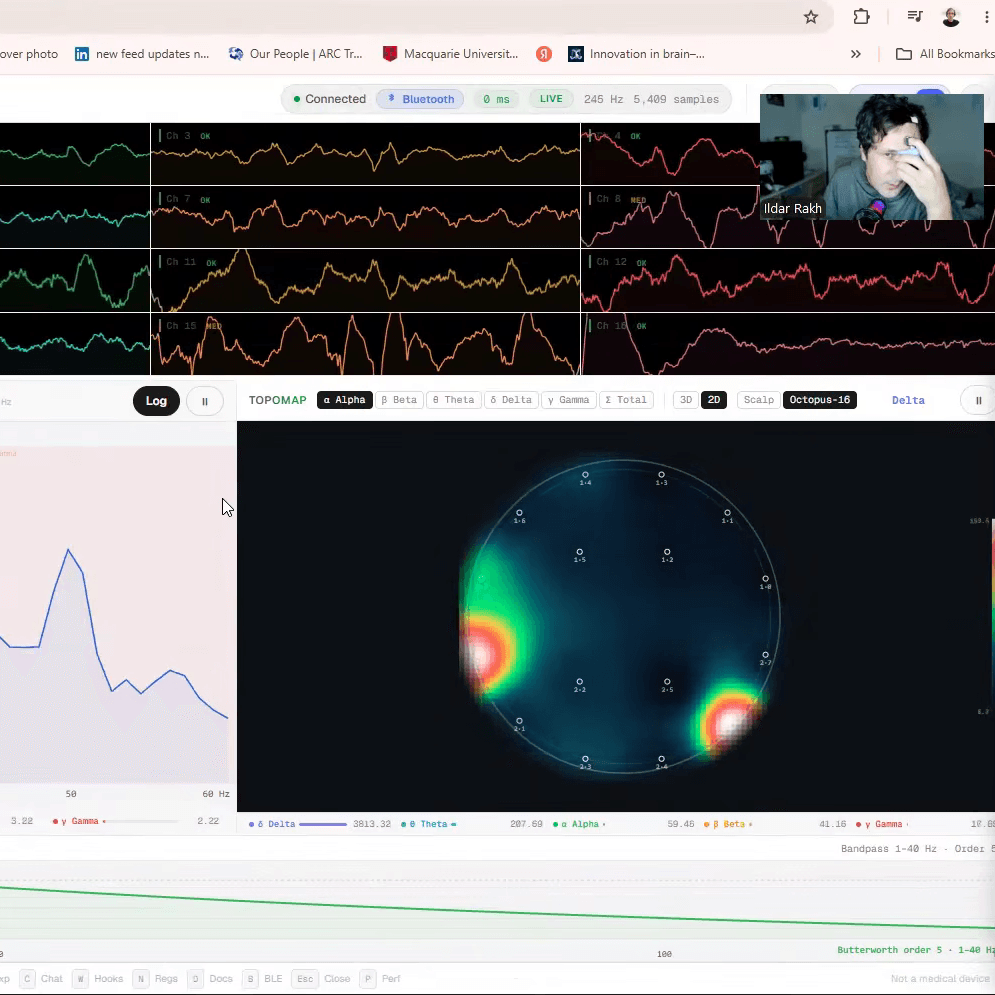
Ildar Rakhmatulin and Youssef El Abbass have built Octopus 16, a 16-electrode EEG headset that transmits brain signals to a host machine over Bluetooth Low Energy and costs far less than clinical-grade hardware.
The hardware is specific: 16 pogo-pin contacts in a coin-sized cluster, two Texas Instruments ADS131M08 8-channel ADCs running at 24-bit resolution, and an ESP32 handling data transport. The assembly straps against the scalp, no gel required, and feeds into the PiEEG software platform. The team has already used it to detect focus states and route that signal into simple game environments.
The honest caveat buried in the original is worth reading: 24-bit ADCs mean nothing if your signal-to-noise ratio is poor, and right now Octopus 16 performs roughly at the level of the old Mattel Force Trainer toy. The full write-up and GitHub repository detail exactly where the design stands and what it would take to push it further, which is the real reason to click through.
[READ ORIGINAL →]