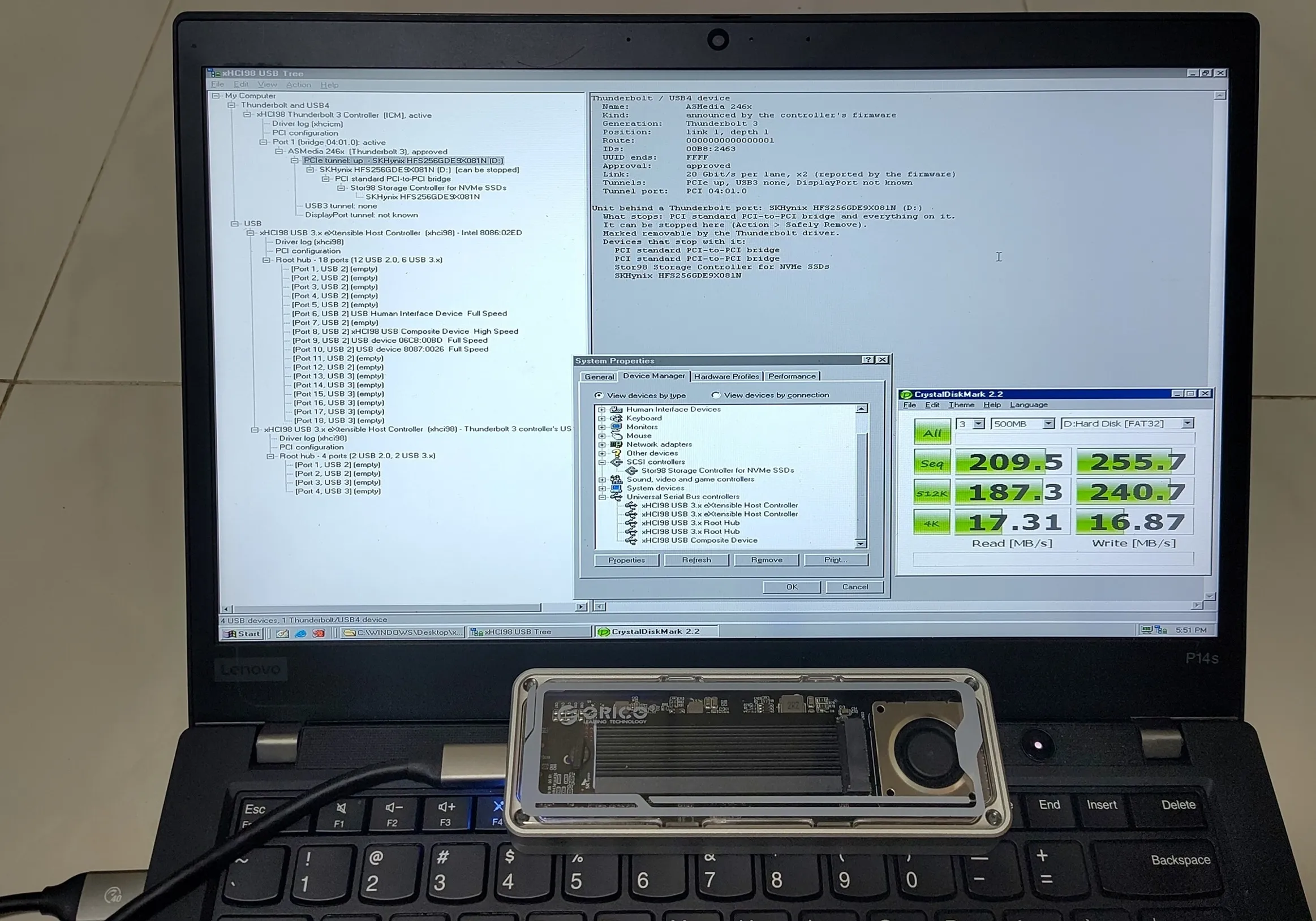
Yeo Kheng Meng has shipped working USB 3.0 and experimental USB 4.0/Thunderbolt 3 drivers for Windows 98 through Windows 7. The USB 3.0 driver replaces the earlier xHCI98 USB 2.0 driver, both available on GitHub. On Windows 98, USB 3.0 throughput caps at roughly 200 MB/s, a hard ceiling imposed by the OS's 64 KB maximum USB transfer request size, not the hardware.
The USB 4.0 side is where it gets strange. Installing xhcicm.sys gives Windows 98 experimental Thunderbolt host support, and pairing it with Stor98, a fork of SweetLow's NVMe9x project, lets the OS access a docked NVMe drive over that connection. Thunderbolt is a multi-protocol bus, not just a fast pipe, so making any of this work at all is the real story. The NVMe9x fork is being merged back into the main repo.
The piece most likely to outlast this specific hack is Meng's fork of QEMU 11, which emulates USB 4 and Thunderbolt hosts and devices, giving developers a testbed without requiring real hardware. Read the full writeup for the LLM-assisted driver development process and the architecture decisions that made Thunderbolt negotiation possible on a 1998 kernel. Meng's prior work includes Swift on the Apple II and running llama.c inference under DOS, context that explains why none of this surprises his followers.
[READ ORIGINAL →]