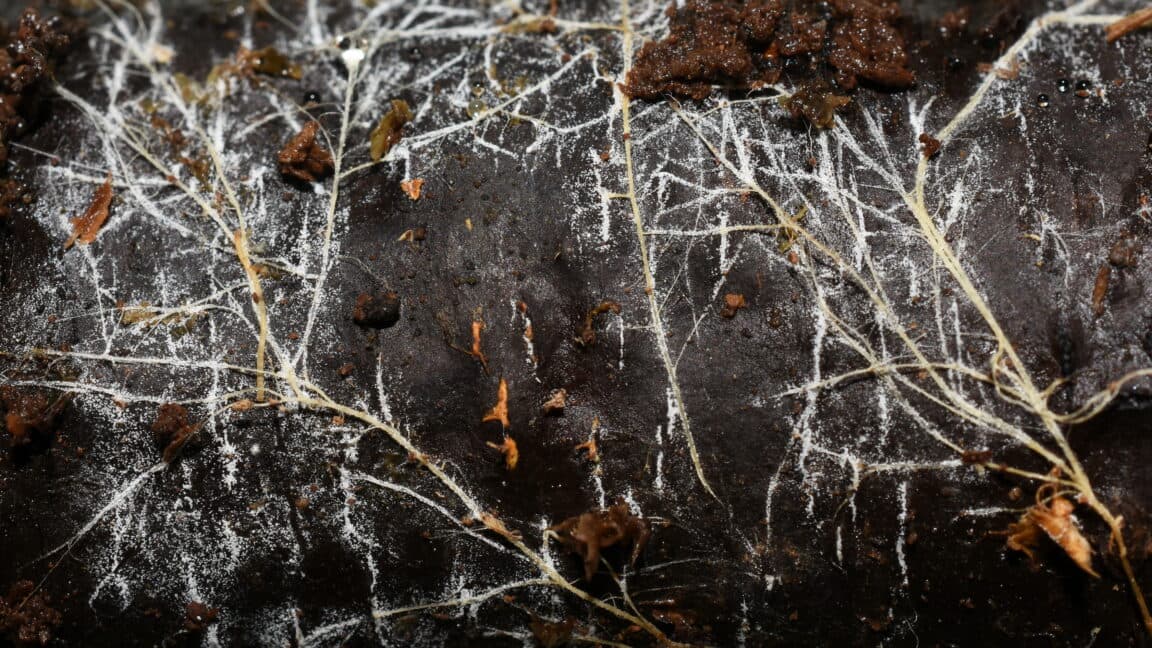
Earth hosts 110 quadrillion kilometers of arbuscular mycorrhizal fungal networks underground. That figure, published in Science this week, means the combined threads would stretch nearly a billion times the Earth-sun distance, well past the edge of the solar system.
These networks are not passive infrastructure. They pull 1 billion tons of carbon into the soil annually by trading phosphorus and nitrogen to plant roots in exchange. Without them, that carbon enters the atmosphere. The networks have existed for hundreds of millions of years, but until this study led by SPUN, no one had mapped their global distribution.
The methodology is what makes this worth reading in full: SPUN combined soil samples collected worldwide, a literature review, machine learning models, and lab analysis to estimate both mass and density distribution. The map they produced is the first of its kind. The question it raises is which regions are most at risk, and whether that 1 billion ton carbon figure holds under accelerating land-use change.
[READ ORIGINAL →]