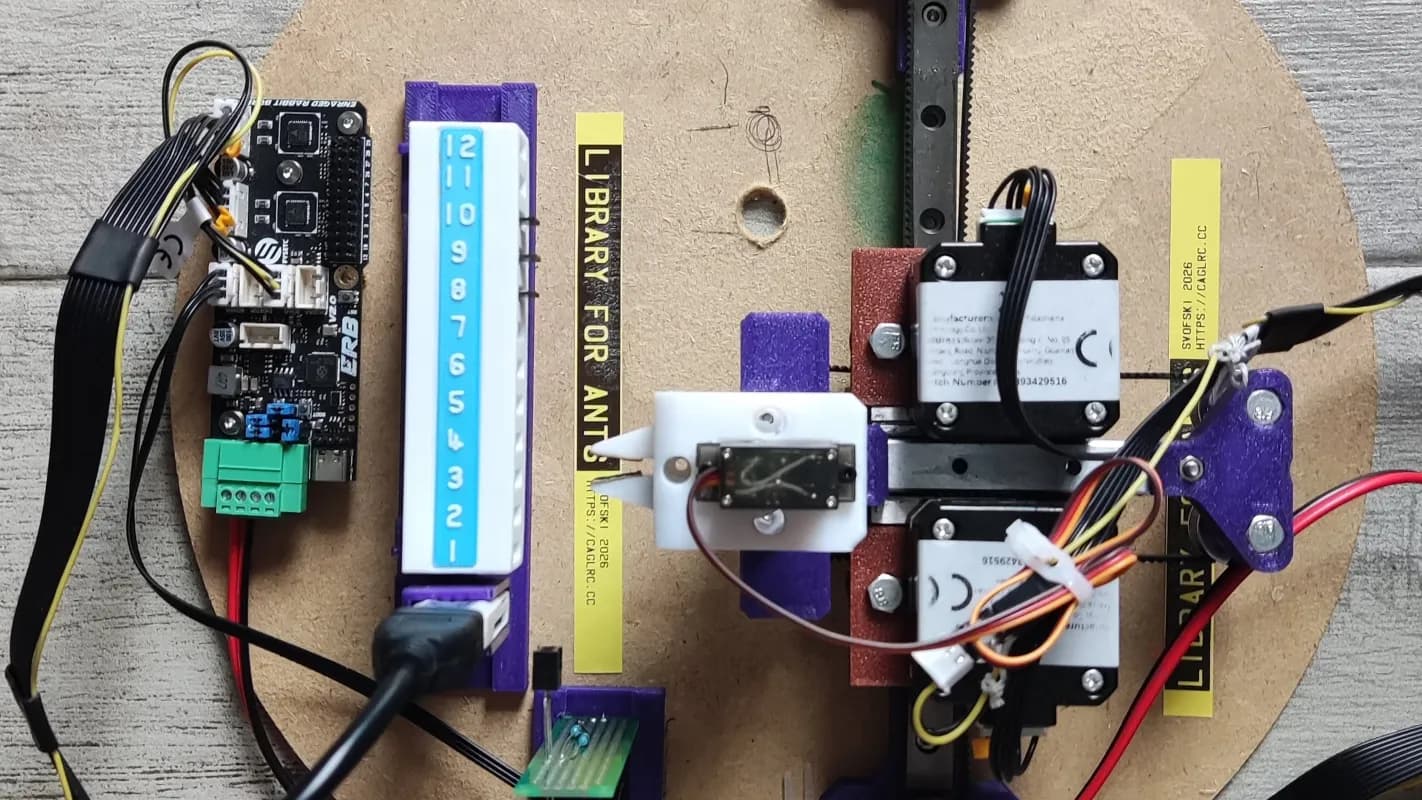
A hobbyist called svofski built a working microSD card library using a small robotic arm and 3D-printed components, capable of picking and placing among 12 microSD card slots. The motivation was practical: component prices are up, and the builder had a stockpile of cards already on hand. The result is a functioning automated storage and retrieval system for flash media, built largely from printer parts.
The mechanical design went through at least two iterations. The first gripper rotated its pincers, proved too complex, and was scrapped. The final version uses a rack-and-pinion style slide mechanism, and the arm itself runs on a T-bot kinematic arrangement, functionally similar to the coreXY systems common in consumer 3D printers. That design choice kept the part count low and sourcing straightforward.
Svofski built this out of interest in robotic tape changers, not to solve a specific production problem. That framing is what makes the full project log worth reading: the engineering decisions are driven by curiosity, not a spec sheet, and the documented dead ends are more instructive than the final result. Anyone needing to automate large-scale SD card duplication now has a real hardware reference to build from.
[READ ORIGINAL →]