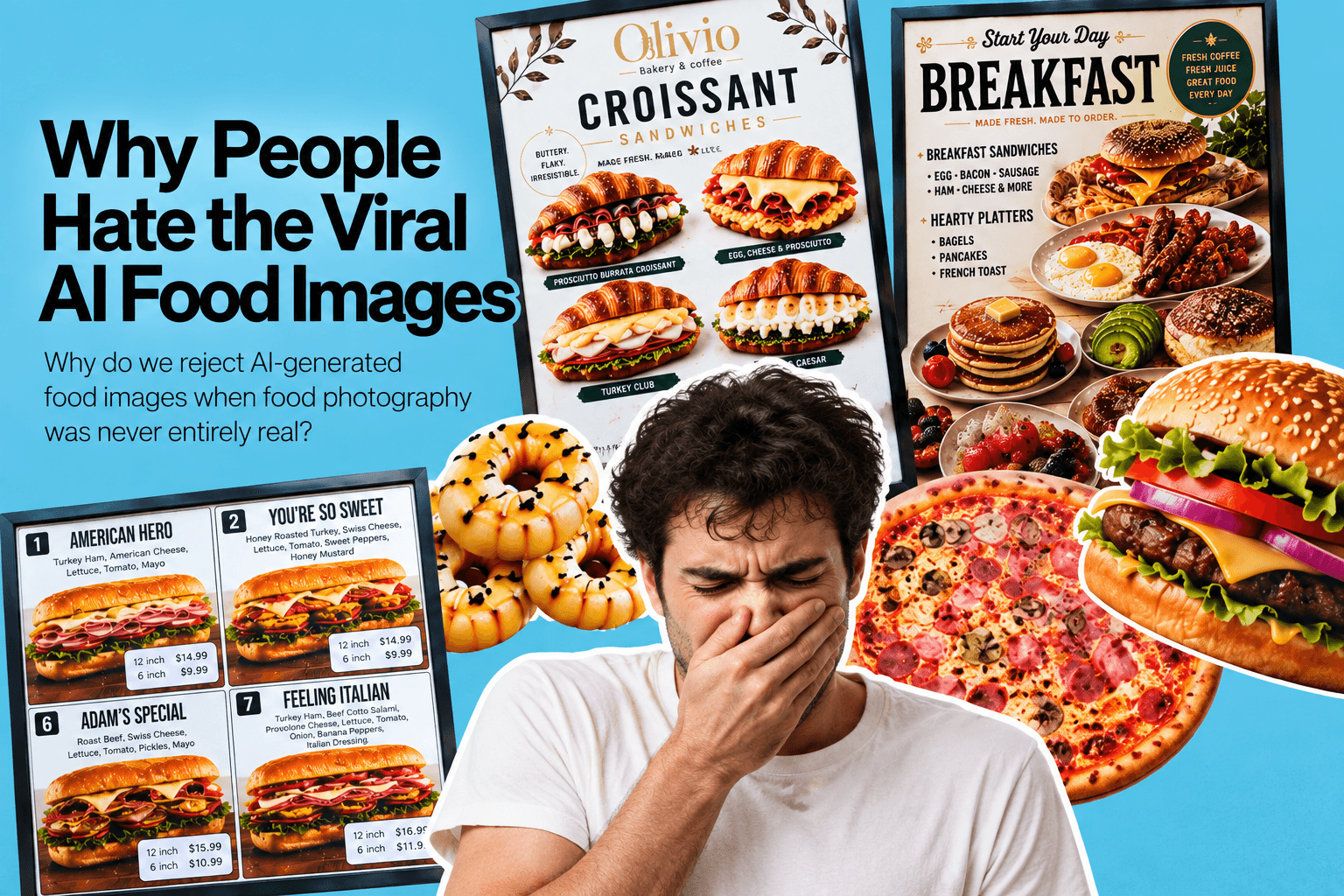
AI-generated food imagery is triggering widespread public rejection, and the UX Collective piece by this title argues the disgust is not about technology literacy or aesthetic preference.
Humans have manipulated food visuals for decades: motor oil for syrup, cardboard under burger patties, hairspray on fruit. The difference now is authorship and intent. When a human art director fakes a perfect burger, there is a craftsperson behind it with accountable judgment. When a model generates it, there is no one to hold responsible, no creative decision, no limit. The article digs into why that absence of human agency changes how viewers emotionally process the image, even when they cannot articulate it.
The full piece is worth reading for its breakdown of the specific visual tells that mark AI food images as uncanny, and for the UX argument underneath: that user trust is not just about accuracy, it is about perceiving intentionality. If your product touches generated visuals in any context involving appetite, commerce, or health, this is required reading.
[READ ORIGINAL →]