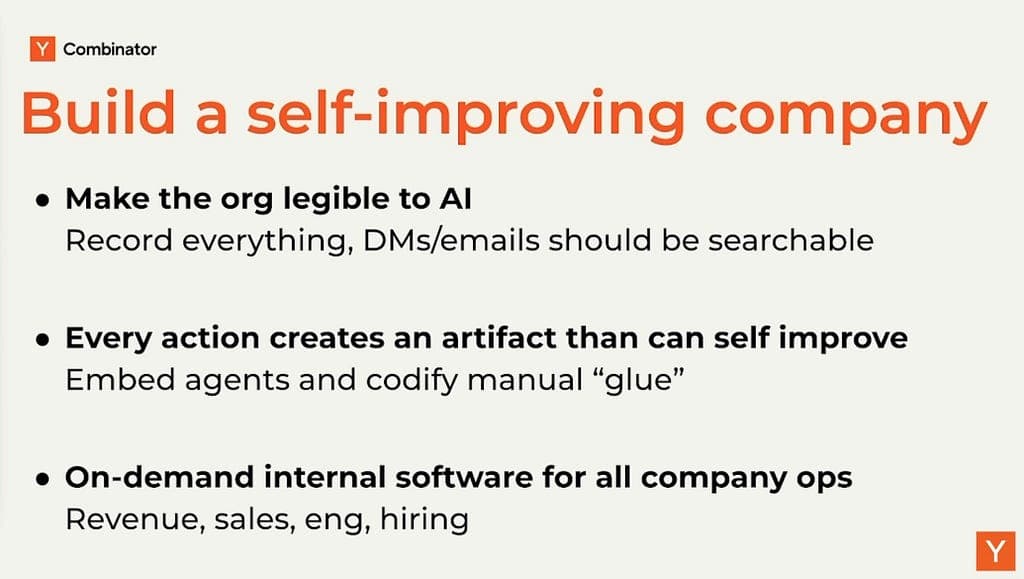
Cybernetics is the most important technical framework nobody in AI engineering is naming correctly. Boris Cherny, Head of Claude Code at Anthropic, stated it plainly: 'I don't prompt Claude anymore. I have loops running that prompt Claude and figuring out what to do. My job is to write loops.' That sentence describes a control loop with a reference state, a comparator, and corrective feedback. It is the foundational mechanism Norbert Wiener formalised in 1948. Cherny, Tom Blomfield at YC, and production engineers at Factory have all arrived at the same structural architecture through independent paths. None of them are calling it cybernetics. It is.
The article does more than draw a historical parallel. It delivers a working primer on six cybernetic concepts that directly map onto agentic system design: reference state, feedback, variety, homeostasis, POSIWID, and phase space. W. Ross Ashby's Law of Requisite Variety is the most immediately practical. A regulator must possess at least as much variety as the system it controls. An agent facing more complexity than its response repertoire can handle does not fail from lack of intelligence. It fails from lack of variety. Stafford Beer's POSIWID principle, 'the purpose of a system is what it does,' is the diagnostic for agents drifting from their stated objectives. These are not metaphors. They are the design constraints your agentic system is already subject to, named or not.
The Blomfield case study, drawn from a YC internal query agent, is where the argument moves from theory to production. A monitoring agent watches every query, diagnoses failures overnight, writes fixes, opens pull requests, routes them through a review agent, and deploys before morning. That is a viable system in Beer's 1979 definition, self-regulating, self-correcting, maintaining its own viability without human intervention in the loop. The article argues the forgetting of cybernetics was not accidental. Reading the full piece is necessary to understand why that matters now, and what it means that practitioners are rediscovering it without the vocabulary to name what they have built.
[READ ORIGINAL →]