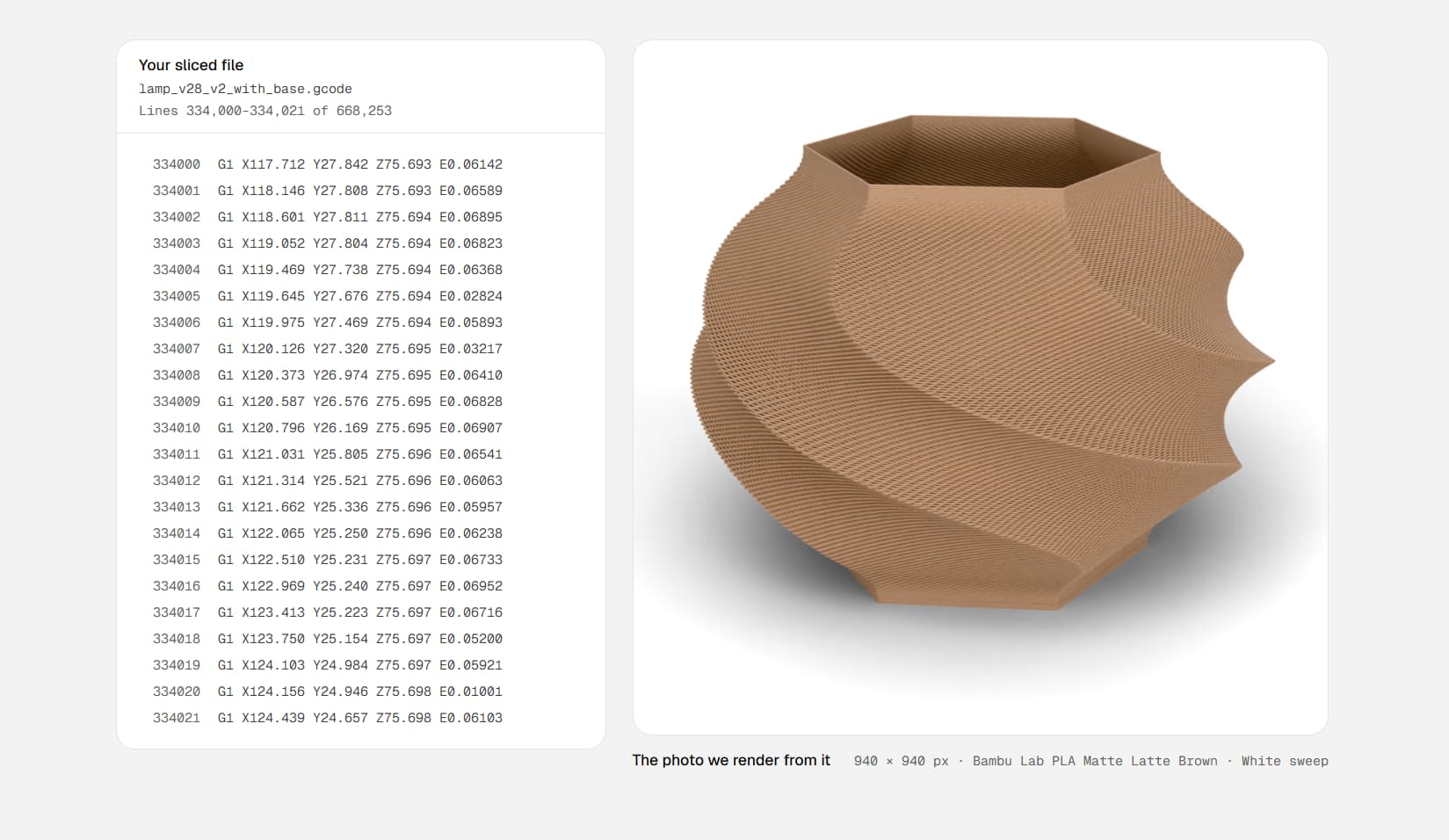
Extrudio renders 3D printed parts directly from G-code, not from STL geometry. That distinction matters: the tool sweeps a virtual plastic bead along actual toolpaths, producing layer lines, stair-stepping on curves, and other print artifacts that CAD renderers cannot show because they never see the slicer output.
The practical target is sellers of 3D printed parts who need product images without printing every colorway or finish. Extrudio outputs renders against studio backgrounds or scene presets like a bench or kitchen. It is faster than printing and photographing, though the authors acknowledge real photographs still win on realism.
The deeper reason to read the original: the architecture of parsing G-code as render geometry, rather than reversing to mesh, is the unusual technical decision worth understanding. If this approach matures, it could also expose print-quality predictions before a job runs, not just pretty pictures after.
[READ ORIGINAL →]