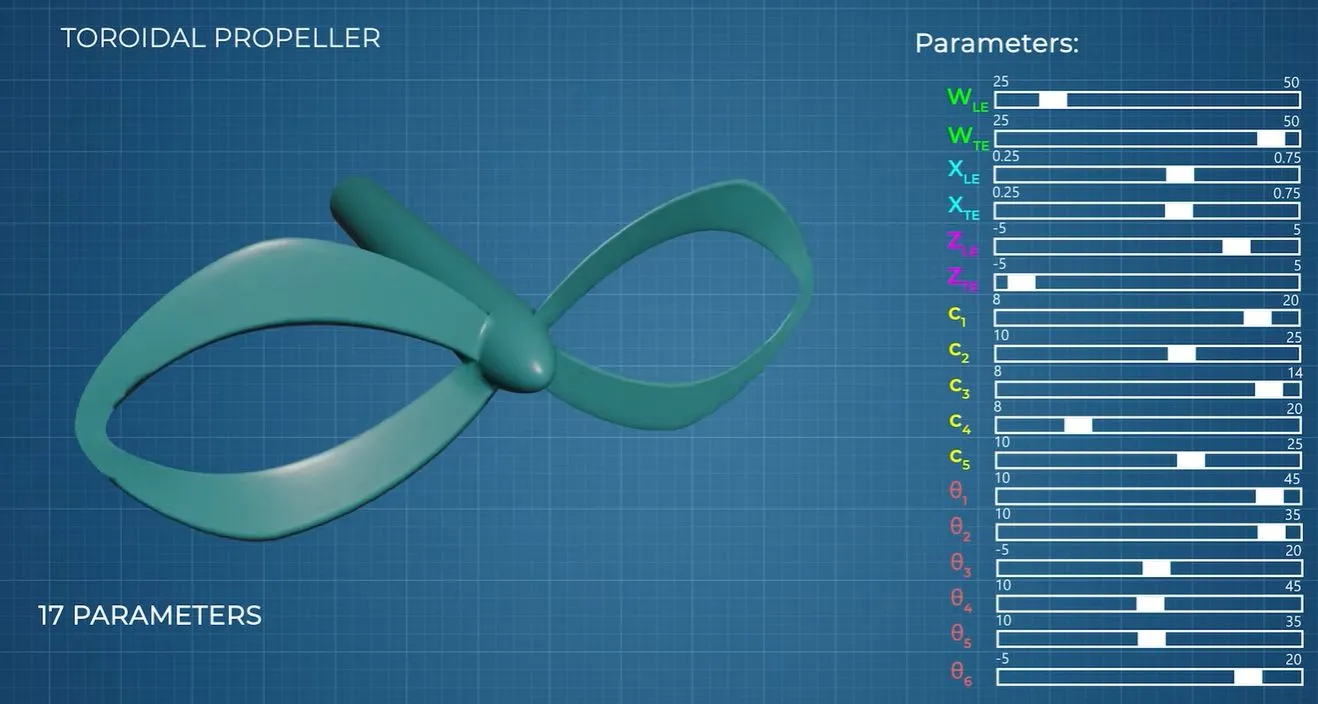
A CFD-optimized toroidal propeller design, designated G1401, topped out at 62% efficiency in physical testing. The conventional propeller it was benchmarked against scored 73%. Neuronautics ran the full comparison on YouTube, using a scanned conventional propeller as the baseline, then spending two months iterating across 17 shape parameters to find the best toroidal geometry.
The methodology is what makes this worth reading in full. Brute-forcing 17 parameters in CFD is computationally prohibitive, so Neuronautics applied multiple reference frame simulation, documented in a 2019 Franzke et al. paper in Energies, to cut simulation time, then trained a neural network to filter results and converge on a single candidate design. Even after that, airfoil shape was iterated separately, and the resin 3D-printed result had to be manually reworked because the optimized geometry came out too thin and flexible to function.
The toroidal propeller lost on raw efficiency. But the gap between 62% simulated and 62% measured is its own result: the simulation held. The real question the original raises is whether toroidal designs trade efficiency for noise reduction, and whether that tradeoff has any practical application worth pursuing. That argument is still open.
[READ ORIGINAL →]