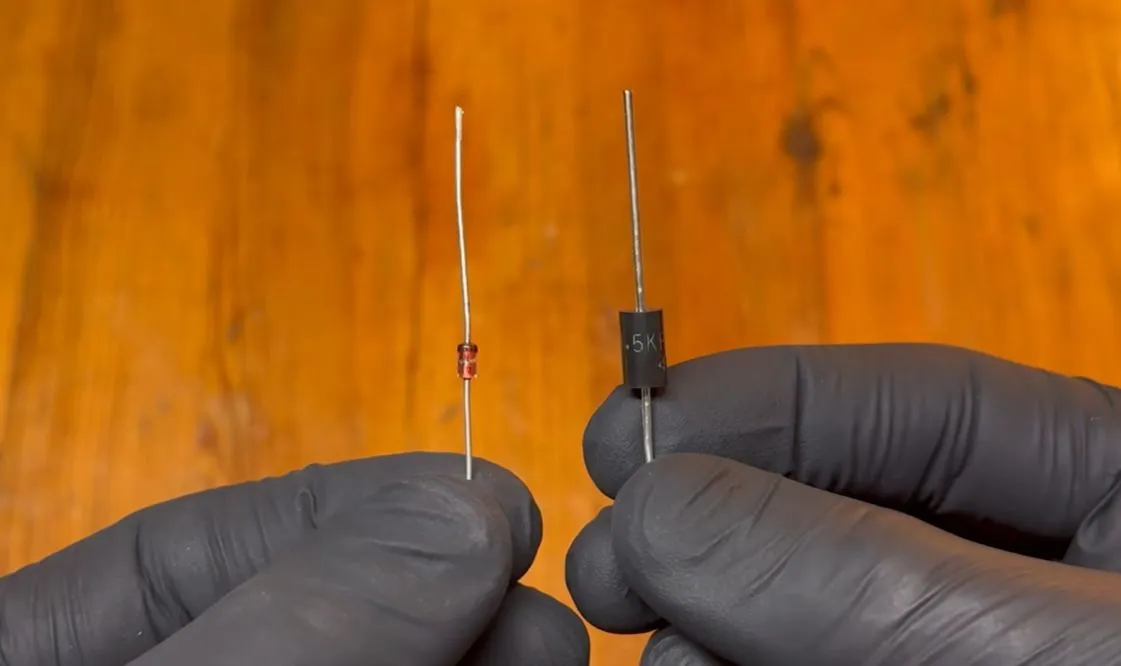
Zener diodes fail at ESD protection because they are too slow. TVS diodes respond in picoseconds. Zener diodes operate in nanoseconds or slower, giving a transient voltage spike enough time to destroy downstream components.
The physics underneath both components is closer than the naming suggests. Zener diodes begin conduction via the Zener effect, then transition to the faster avalanche effect. The doping level of the p-n junction determines that crossover point. TVS diodes are engineered specifically to hit avalanche conduction as early as possible, and their larger physical package exists for one reason: dissipating the thermal energy generated during reverse conduction without self-destructing.
BTT Lab's video is worth watching in full not for the conclusion, which is straightforward, but for the component-level breakdown of why two diodes that share a core operating mechanism are not interchangeable. Use TVS diodes for surge suppression. Use Zener diodes for voltage clamping and reference applications. The naming has been obscuring this distinction for decades.
[READ ORIGINAL →]