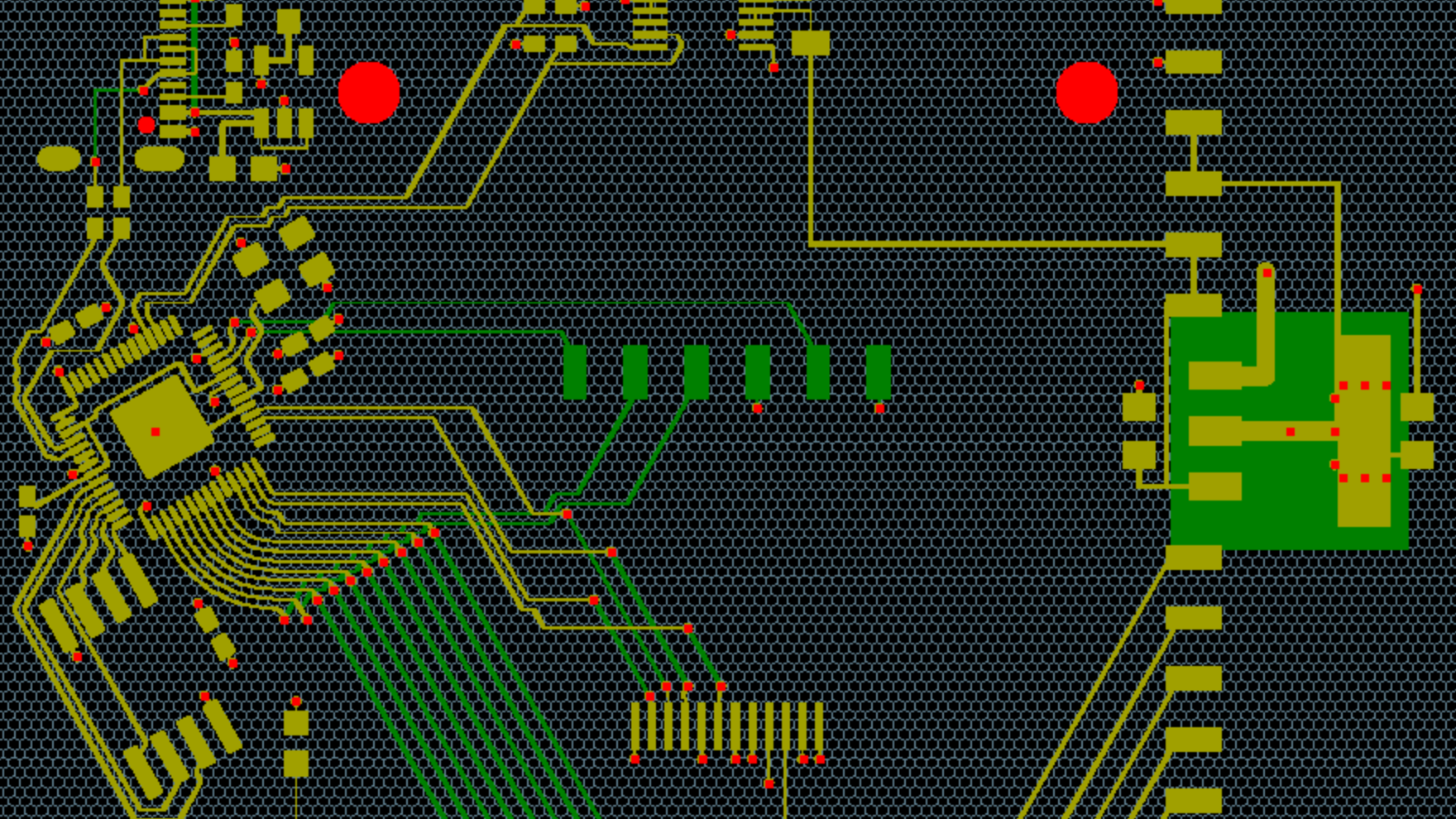
James Bowman replaced the square grid in his CuFlow PCB autorouter with a hexagonal grid, and the geometry pays off in measurable ways. Each hexagonal cell has six equidistant neighbors versus four on a square grid, and because a hexagon approximates a circle more closely than a square does, the same minimum-distance design rules permit smaller cells. The result is denser trace packing in the same board area.
The underlying algorithm is Lee's pathfinding, applied to a cell-based board representation. That is not exotic, but the grid choice is. The original CuFlow implementation used squares, and the switch to hexagons is the specific engineering decision Bowman documents and argues for. The piece is worth reading for the geometric reasoning alone, not just the conclusion.
Bowman built CuFlow himself, which puts him in a small category. Most designers route to an external tool like FreeRouting. High-speed PCB work makes custom autorouting significantly harder, and Bowman does not claim to have solved that. What he has done is identify one structural improvement that costs nothing in algorithmic complexity and gains real routing density.
[READ ORIGINAL →]