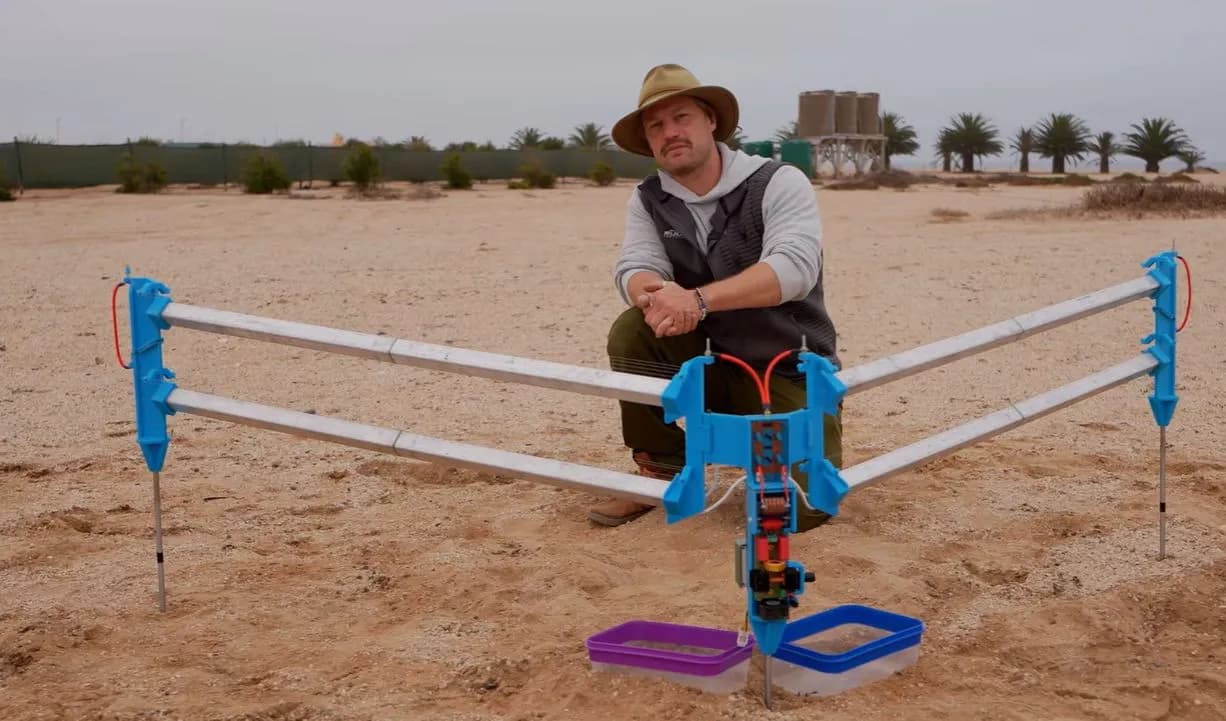
Plasma Channel took their 50,000-volt electrostatic fog harvester to the Namib Desert for field trials conducted in partnership with the University of Namibia. The system uses electrostatic precipitation to actively pull moisture onto collection surfaces, a fundamentally different approach from passive mesh collectors that rely on random molecular contact.
Results were mixed but instructive. Fog was scarce during the testing window, limiting collection opportunities. More critically, ocean salt spray carried several kilometers inland aggressively corroded the high-voltage electronics, a failure mode that lab conditions never surfaced. The hardware survived the flight in check-in luggage and functioned correctly when fog was present, so the physics holds.
The project is not dead, it is iterating. A corrosion-resistant redesign is underway before the next deployment, targeted at the Atacama Desert. The original lab coverage from February 2025 and the engineering decisions made under real desert constraints are what make the full video worth watching, not just the outcome.
[READ ORIGINAL →]