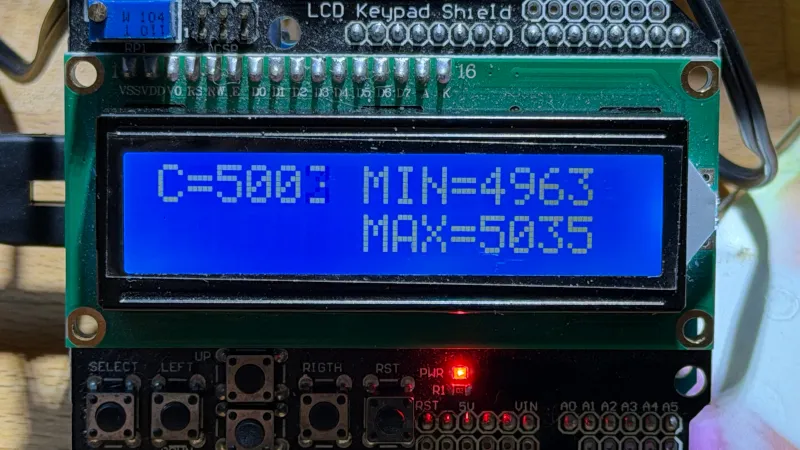
AC grid frequency is not fixed. In interconnected grids like Europe's, 50Hz is a nominal target, not a guarantee, and that drift carries real information about grid stability and geopolitical stress.
Jeroen Brinkman built a grid stability monitor using an Arduino Uno and a 2x16 LCD. The high-voltage sensing problem is solved cleanly with an optocoupler toggling an interrupt pin, keeping dangerous mains voltage away from the microcontroller. Storage is aggressive: 4 bytes per week means a Nano R3 holds 240 weeks of data and a Nano R4 holds over 2,000 weeks, roughly 39 years. Data pulls over USB serial.
The technical build is straightforward, but the original is worth reading for the broader context: in 2018, a political dispute between Kosovo and Serbia caused Europe's interconnected grid to lose six minutes of cumulative frequency deviation, which showed up in clocks across the continent. A cheap Arduino on your wall can log that kind of event. That's the real hook.
[READ ORIGINAL →]