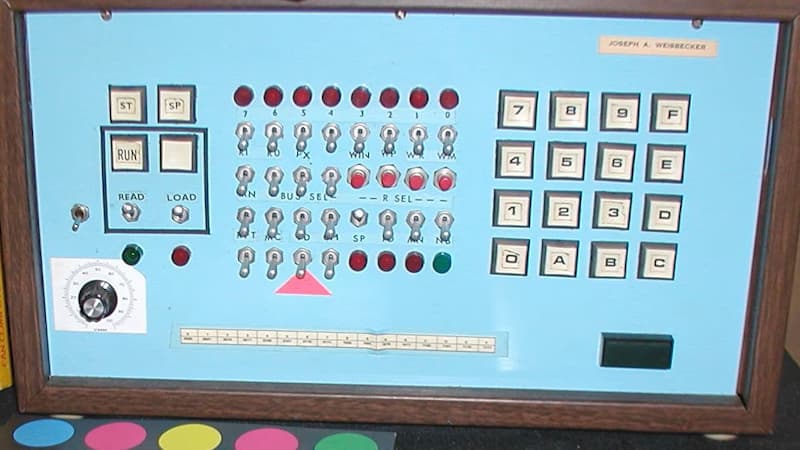
In late 1976, Joseph Weisbecker published a Popular Electronics article promising a 'powerful, expandable' computer for $80. That machine was the COSMAC ELF, built around the RCA 1802 CPU, a chip Weisbecker designed himself, starting as a personal project he called 'Fred': 100 TTL chips on a lab bench, conceived partly as a video game platform. The ELF turned 50 this year, and Tech Time Traveler's video dissects exactly why this $80 kit mattered in a market where the Altair and Apple I were still out of reach for most hobbyists.
The 1802's architecture is the real story here. It had built-in DMA at a time when the 8080 and Z80 did not, which made dirt-cheap composite video output possible by simply streaming bytes from RAM to a TV. It also packed 16 general-purpose 16-bit registers, any of which could serve as the program counter or a memory index. The tradeoff was brutal: no hardware stack. Calls and returns required SCRT, the Standard Call Return Technique, a documented software convention from the RCA manual that worked but added serious overhead. The architecture is clean and regular enough that one-man authorship is obvious the moment you read the instruction set.
People still build 1802-based machines from scratch, and simulators remain active. The video goes deeper than the specs, covering Weisbecker's background building relay-based tic-tac-toe in high school and the internal RCA politics around the chip. The tension between an elegant but constrained architecture and real-world programming demands is worth understanding. Read the original for the context on how a single engineer's side project became the CPU inside a $80 kit that brought computing to thousands of people who couldn't afford anything else.
[READ ORIGINAL →]