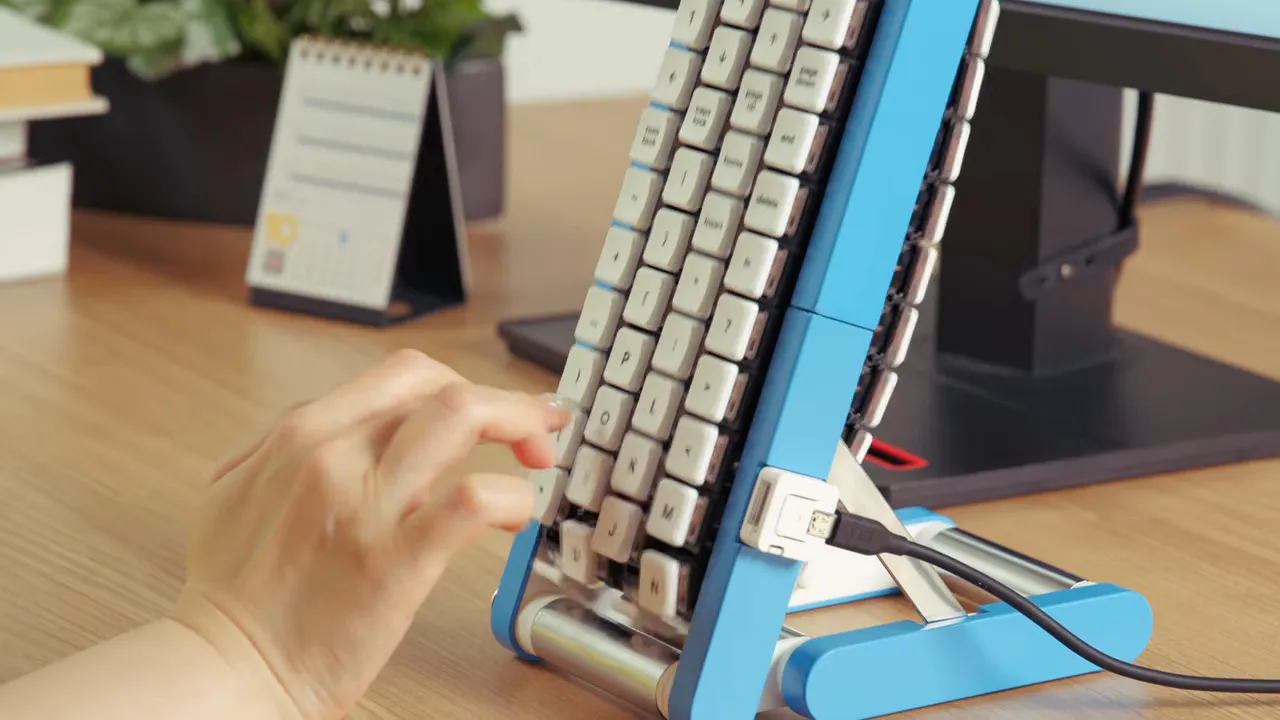
Google Japan posted a functional conveyor belt keyboard to GitHub, complete with firmware, STL files, and a build guide. The four rows of keys are 3D-printed chains carrying mechanical switches, each row backed by a flexible PCB. It is real enough to build. It is impractical enough that reaching backspace requires waiting for a full belt cycle.
The critical wiring problem, how keypresses actually travel off a moving belt and into a computer, is listed as TBD in the build guide and the source code is incomplete. That gap is where the article earns its read. The authors propose three serious solutions: a BLE microcontroller embedded in each belt, RFID tags read by base-mounted sensors, or SMD LEDs on the flex PCB flashing ASCII codes past a fixed detector. None of these are jokes. All of them would technically work.
Google Japan has shipped weird keyboards before, including a wearable hat variant and a rotary-phone input device. This one is the first with enough published hardware to actually attempt a build. The incomplete source code and missing electrical solution mean this project is unfinished in public, which makes it more interesting, not less. Someone will close that gap.
[READ ORIGINAL →]