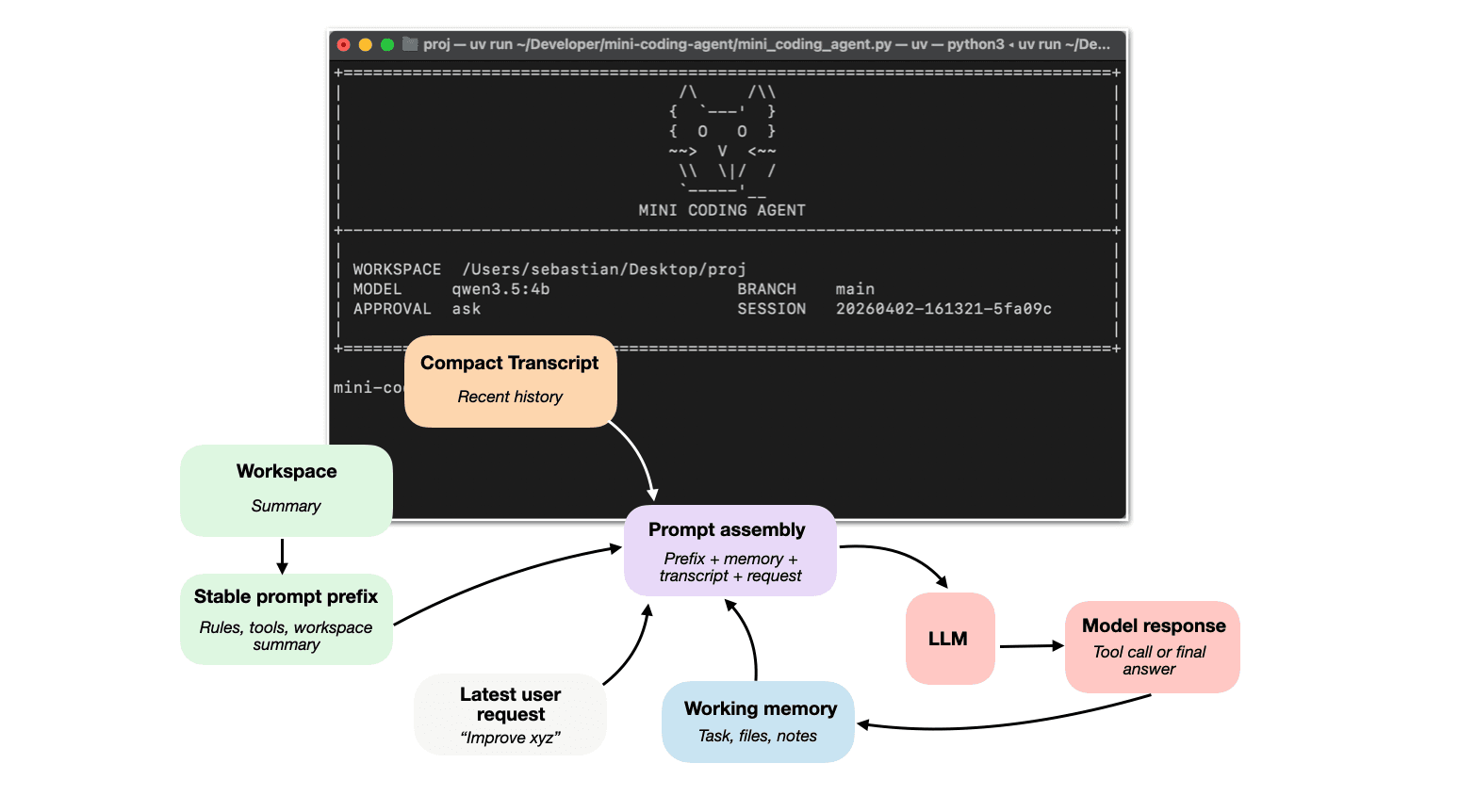
The agentic harness, not the model, explains most of the performance gap between Claude Code and a plain chat interface. Sebastian Raschka, author of 'Build a Large Language Model (From Scratch)', breaks down the six core building blocks of coding agents: the LLM as base engine, reasoning models as compute-heavy variants, and the harness layer that handles tool calls, repo context, prompt-cache stability, memory, and long-session continuity. These components are distinct. Collapsing the model, reasoning behavior, and agent product into a single concept is a common mistake, and this article corrects it with precision.
The control loop is the critical mechanism. Given a goal, the harness decides what to inspect, which tools to call, how to update state, and when to stop. Systems like Codex CLI and Claude Code are not smarter models. They are the same models wrapped in an application layer engineered for software-specific workflows, including repository-level context management and session continuity across long tasks. That architectural distinction is what makes them feel categorically more capable.
Read the full piece for the breakdown of all six building blocks and how they interact in practice. The value is not just the conclusion but the structural map Raschka provides for understanding why any coding agent behaves the way it does, and what levers actually matter when you are building or evaluating one yourself.
[READ ORIGINAL →]