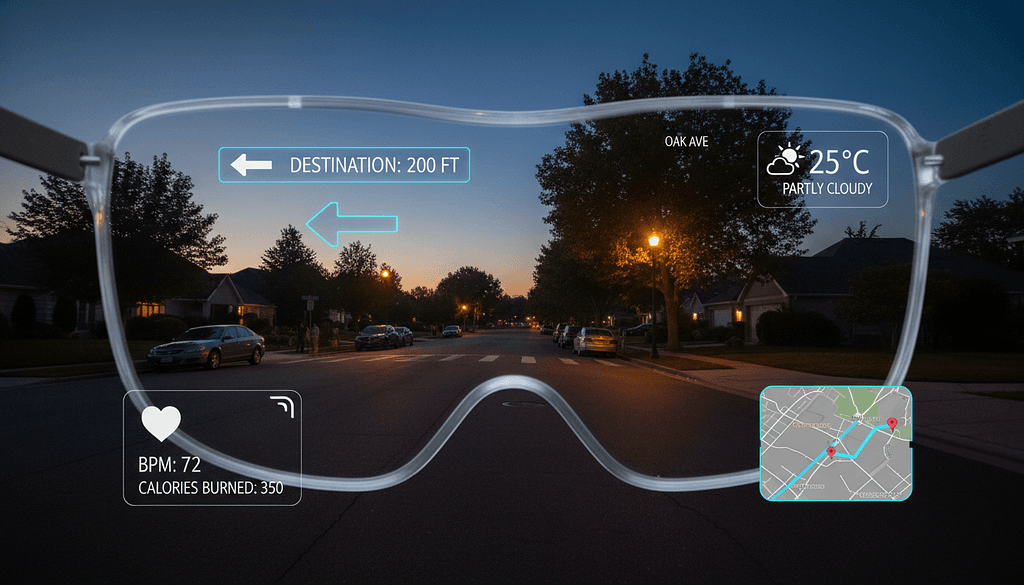
AR glasses from XREAL and Meta are shipping now, and the accessibility question is already overdue. Current hardware uses waveguide optics, depth sensors firing invisible laser pulses, and wristbands that read muscle electrical signals to translate gestures into commands. Meta's Ray-Ban glasses already integrate Be My Eyes via voice command. INMO GO displays real-time speech-to-text with live translation. These are early implementations, not finished solutions.
The more interesting argument in this piece is not about disabled users specifically. It is about multi-sensory design as a universal strategy. Research cited here shows haptic feedback makes sounds appear roughly 12% louder than they are, and pairing a single light flash with multiple beeps causes people to perceive multiple flashes. AR hardware, with its combination of cameras, eye-tracking, haptics, and spatial audio, is physically capable of exploiting these cross-sensory effects at scale. The Last of Us Part II is the clearest proof of concept: features built for accessibility, adopted broadly, and reported to increase immersion.
The core argument worth reading in full is the timing claim: design patterns for AR are not locked in yet, and that window is closing. The article traces exactly how each hardware component, display, spatial mapping, interaction system, wristband, maps to a sensory channel that has documented effects on human perception. If those connections get ignored now, they will be retrofitted later, badly, for a subset of users. The research section on cross-sensory perception is where the piece earns its premise.
[READ ORIGINAL →]