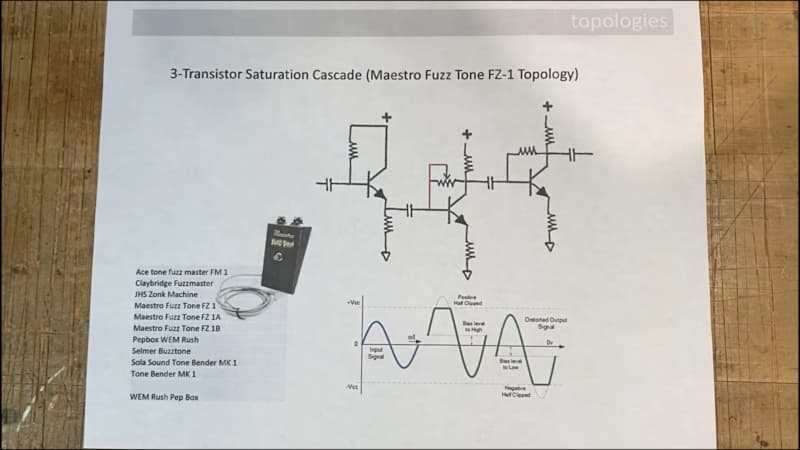
Eight circuit topologies produced every fuzz tone you have ever heard. Bill Jehle of Mad Scientist Guitar Lab breaks down the full evolutionary arc of 1960s fuzz box design on YouTube, moving from simple diode clippers through frequency doublers and phase shifters, with a companion playlist so you can hear each circuit's output immediately.
The deeper argument here is historical and technical: these engineers had almost nothing but the transistor, so they learned to push device characteristics past their rated limits with precision. That constraint forced an intimacy with component behavior that modern designers rarely need. The circuits are simple on paper and brutal in practice.
Read the original for the full topology breakdown and the embedded video. Then follow Hackaday's link to the Roland TR-808 piece, which covers how defective transistors became a defining drum machine sound. Both stories are about the same thing: hardware limits turned into tools.
[READ ORIGINAL →]